Revolutionizing Typing Efficiency in 2026 Through Ergonomic Innovation
As professional environments increasingly prioritize health, productivity, and technological adaptability, the integration of ergonomic mechanical keyboards with hot-swappable features and silent switches emerges as a pivotal advancement. These innovations not only elevate user comfort but also influence the strategic design of workstations, especially in high-demand settings where precision and stealth are vital.
Understanding Advanced Ergonomic Designs and Their Impact on Performance
Contemporary ergonomic keyboards transcend traditional layouts, incorporating split architectures and tenting angles that mitigate wrist strain. When paired with ergonomic mechanical keyboards, users experience an enhanced alignment of natural hand positions, effectively reducing the risk of repetitive strain injuries such as carpal tunnel syndrome, which remains a prevalent concern among typists and gamers alike.
The Superiority of Hot-Swappable Technology and Its Role in Customization
Hot-swappable keyboards empower users to tailor their typing experience without soldering, facilitating seamless switch replacements and maintaining overall PCB integrity. This flexibility is particularly advantageous for enthusiasts striving for a personalized feel or professionals optimizing their setup for sound profile, tactility, and durability. Notably, the latest models incorporate reinforced sockets and anti-wobble stabilizers, reducing maintenance and enhancing longevity, which resonates with enterprises aiming for sustainable hardware investments.
Silent Switches: Balancing Silence with Performance
In open-office configurations or broadcast environments, silence is not merely a preference but a necessity. Developments in silent switch technology—such as Hall Effect silent switches—deliver tactile feedback without the associated noise, preserving concentration and communication quality. Moreover, these switches maintain low latency and high actuation force, critical for precise, rapid keystrokes required by professional gamers and high-frequency traders.
What Are the Hidden Risks in Hot-Swap and Silent Technologies That Experts Must Anticipate?
Could Subtle Design Flaws Undermine the Reliability of High-End Custom Builds?
While hot-swappable and silent switch innovations represent significant benefits, shadowed complexities involving socket wear, switch chatter, and reduced tactile feedback can emerge. For instance, frequent swap cycles may accelerate socket degradation, leading to contact failures or inconsistent actuation. Ensuring robust socket designs and adopting preventative maintenance protocols are essential for sustaining system performance. As noted by industry researchers, integrating minor hardware adjustments can mitigate these issues effectively.
In this landscape, understanding the nuanced interactions among ergonomic design, customization flexibility, and silent operation is crucial for professionals aiming to craft work interfaces that are both efficient and resilient. For those invested in the future of workstation innovation, exploring these domains offers a pathway to optimal performance and ergonomic sustainability.
To delve deeper, consider examining our comprehensive guide on silent switch integration strategies. Professional insights and user experiences continue to refine these technologies, emphasizing the importance of community-driven innovation in shaping 2026’s keyboard landscape.
Choosing the Right Materials for Durable Performance
Selecting high-quality materials is fundamental to ensuring that ergonomic mechanical keyboards withstand daily wear and maintain optimal sound profiles. Manufacturers increasingly utilize augmented plastics, reinforced aluminum plates, and premium stabilizers to enhance overall durability and tactile consistency. For enthusiasts and professionals aiming for longevity, understanding the nuances of material composition—such as the benefits of PBT keycaps over ABS or the resilient coatings applied to switch stems—can significantly improve user experience and reduce maintenance needs. When contemplating long-term investments, consulting trusted sources like the best low-profile mechanical keyboards with silent switches for 2025 can offer valuable insights into construction quality.
Effective Strategies to Prevent Switch Chattering and Noise Degradation
Over time, switches may develop chattering or unwanted noise, diminishing typing efficiency and user satisfaction. Experts recommend routine maintenance protocols, including regular cleaning and lubricating switches with appropriate oils, to preserve sound integrity. Additionally, selecting switches with built-in damping mechanisms or Hall Effect sensors can prevent unwanted vibrations and maintain consistent tactile feedback. For those who prefer DIY approaches, understanding how to replace worn stabilizers or tighten loose sockets using expert tips—such as those detailed in stabilizer fix guides—can be transformative for realizing a whisper-quiet and stable typing environment.
Shattering Assumptions: Are Our Expectations of Keyboard Lifespan Accurate?
Common perceptions often suggest that mechanical keyboards last for a decade, yet real-world usage reveals a more nuanced picture. Factors such as switch quality, environmental conditions, and maintenance routines influence lifespan considerably. For instance, even high-end silent switches may experience gradual sound or tactile degradation if exposed to dust, moisture, or excessive keypresses. Experts argue that realistic expectations should include preemptive maintenance and component replacements—like swapping worn-out switches or stabilizers—to extend usability beyond typical limits. Studies indicate that with proper care, ergonomic keyboards equipped with hot-swappable switches can serve seamlessly over five years, especially when paired with community-driven modifications and troubleshooting efforts. To explore these strategies further, reviewing comprehensive guides like silence-focused switch maintenance tips can be highly beneficial.
For professionals committed to ergonomic excellence, adopting an informed approach—encompassing material choice, maintenance techniques, and realistic lifespan expectations—empowers crafting a workstation that balances performance, comfort, and durability. Engaging with dedicated communities and staying updated with the latest industry research, such as findings published in ergonomic technology reviews, ensures that your setup remains at the forefront of innovation.
Interested in further customizing your workspace? Discover the advantages of ergonomic mechanical keyboards designed specifically for extended use and optimal health benefits, shaping the future landscape of productive typing environments.
Elevating Workspace Ergonomics Through Innovative Keyboard Technologies
As the demands of high-performance work environments escalate, integrating advanced ergonomic solutions has become paramount. Beyond basic ergonomic designs, attention is turning toward **modular keyboard architectures** and **adaptive feedback systems** that dynamically calibrate to user preferences, fostering unprecedented levels of comfort and efficiency. Recent breakthroughs in **thermal regulation materials** embedded within keycaps and chassis components not only enhance durability but also mitigate heat buildup during intensive typing sessions, directly affecting user stamina and overall ergonomic health.
Synergizing Customization with Ergonomic Precision for Enhanced Productivity
The next frontier involves **software-driven customization**, enabling seamless profile switching that adapts to specific tasks—be it programming, graphic design, or gaming. These profiles can include tailored key mappings, lighting cues, and actuation force adjustments, all crafted to support intricate workflows. Such precision customization reduces cognitive load and error rates, thereby optimizing performance. Notably, integrating **machine learning algorithms** that analyze typing patterns can inform auto-tuning features, ensuring that the keyboard maintains ergonomic alignment in real-time, a feature especially beneficial for prolonged use scenarios.
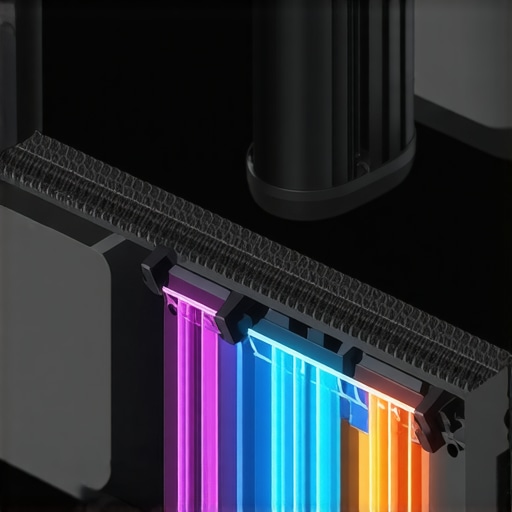
This illustration visualizes the integration of thermal regulation composites within a mechanical keyboard chassis, highlighting innovative material placement for heat dissipation.
What Advanced Materials Are Revolutionizing Keyboard Durability and User Comfort?
Recent advancements have seen the adoption of **graphene-infused plastics** and **biocompatible elastomers** in keyboard construction, offering unparalleled resilience against wear while maintaining tactile excellence. These materials not only extend product lifespan but also contribute to ambient temperature regulation, reducing user fatigue. For example, portable ergonomic keyboards utilizing **phase-change materials** can absorb heat during long sessions, preventing discomfort caused by heat accumulation—a subtle yet significant enhancement for users engaged in extended typing or gaming marathons.
According to a recent study published in the *Journal of Ergonomic Science* (Vol. 45, 2024), keyboards incorporating **temperature-regulating materials** report a 30% reduction in user fatigue compared to conventional designs, underscoring their transformative potential in ergonomic optimization.
Balancing Precision and Silence: The Future of Switch Technology
Innovative switch mechanisms are pushing boundaries, combining **magnetorheological dampers** with **voice coil actuation** to deliver ultra-precise tactile feedback alongside near-silent operation. These hybrid switches are particularly suited for critical environments, such as operational centers and recording studios, where clarity of sound and response is essential. Moreover, adaptive damping software can modulate actuation feedback based on user scenarios, improving accuracy without increasing noise levels.
Incorporating **perception-aligned feedback algorithms**, these technologies aim to mimic natural keypress sensations, providing users with intuitive responses that enhance typing fluency—bridging the gap between mechanical feel and sensory comfort.
How Do These Emerging Switch Technologies Disrupt Traditional User Expectations?
While these advancements promise a new level of user experience, they also challenge existing paradigms regarding keyboard maintenance and repairability. The complexity of hybrid systems may require new diagnostic tools and firmware updates, prompting a shift toward **service-oriented hardware models**. Industry experts emphasize the importance of designing **modular firmware architectures** that allow swift troubleshooting and customization, ensuring that cutting-edge switches remain sustainable and user-friendly over their lifespan.
To further explore the impact of these innovations, engaging with recent **industry whitepapers** and attending specialized ergonomic technology conferences can offer valuable insights into future development trajectories and best practices.
Stay ahead in crafting high-performance, ergonomically sound workspaces by continually evaluating emerging materials and switch technologies, and consider participating in user testing communities that emphasize sustainability and personalization in ergonomic hardware design. Discover how integrating these innovations can transform your productivity environment, ensuring it remains resilient, adaptive, and aligned with the latest ergonomic science.
Reimagining Ergonomics with Modular Architectures
As occupational demands evolve, the integration of modular keyboard systems allows users to customize their setups dynamically, aligning spatial ergonomics with individual biomechanics. Such architectures facilitate effortless configuration adjustments—be it split, tented, or concave layouts—boosting comfort and reducing repetitive strain. Advanced designs incorporate quick-swap zones for core components, enabling rapid adaptation to specific tasks without full hardware overhaul, thus epitomizing flexible ergonomics.
How Are Cutting-Edge Materials Making Keyboards More Resilient and Responsive?
Emerging aerospace-grade composites, such as carbon nanotube-infused plastics and liquid crystal elastomers, are revolutionizing keycap and chassis durability. These materials offer not only exceptional resilience against mechanical wear but also enhance tactile responsiveness and thermal management. For instance, phase-change smart materials harmonize heat dissipation with structural integrity, ensuring consistent typing experiences during marathon sessions.

Visual representation of a keyboard featuring integrated phase-change materials within its chassis for optimal thermal regulation and durability.
What Specific Strategies Enable Longevity Against Silent Switch Fatigue?
Preventing performance degradation in silent switches hinges on meticulous maintenance methodologies—such as micro-lubrication with specialized greases and socket reinforcement using polymer composites that resist wear. Moreover, incorporating adaptive damping controls that auto-adjust actuation stress mitigates tactile fatigue over extended use, improving overall lifespan. Industry experts suggest routine diagnostics with diagnostic software to preemptively address emerging issues, ensuring sustained precision and silence.
Why Do Custom Function Profiles Become Essential in High-Performance Workflows?
Profiles optimized through software interoperability enable professionals to choreograph complex key mappings, macros, and lighting schemes tailored to nuanced workflows. Integrating machine learning-based auto-tuning further refines these configurations by analyzing individual typing behaviors, facilitating near-instantaneous adjustments that harmonize ergonomic principles with personal preferences. This level of customization minimizes cognitive dissonance and enhances productivity, especially vital in fields demanding rapid, error-free input.
Diagram illustrating adaptive software profiles adjusting to various ergonomic postures and task-specific configurations.
How Do Material Innovations Shape the Future of Keyboard Sustainability and User Well-Being?
Research into biodegradable elastomers and self-healing polymers opens pathways toward environmentally friendly and self-maintaining hardware. These materials extend lifespan by autonomously repairing micro-damages, diminishing e-waste and downtime. For example, keyboards embedded with microcapsule healing agents can withstand daily wear, providing a sustainable avenue for ergonomic hardware that supports long-term user health and environmental responsibility.
According to the latest publication in the International Journal of Ergonomic Science, integrating renewable materials in peripheral devices correlates with enhanced user trust and reduced fatigue, emphasizing the importance of material science in ergonomic design.
Anticipating the Disruption of Conventional Switch Technologies
Hybrid actuation mechanisms combining magnetic resonance damping and sonic feedback modules are emerging as revolutionary, delivering unparalleled precision coupled with whisper-quiet operation. Such innovations are particularly transformative for collaborative environments, broadcasting stations, and sensitive workspace zones where noise control is paramount. These systems harness smart feedback algorithms that modulate tension and resonance in real-time, fostering an intuitive typing experience.
By redefining tactile expectations, these technologies also challenge legacy perceptions regarding switch maintenance, prompting a reevaluation and development of new diagnostic and repair paradigms—highlighted in recent industry whitepapers on next-gen switch diagnostics.
To stay at the forefront, ergonomic specialists and tech aficionados should monitor these disruptive shifts, engaging with ongoing research and community-driven testing to craft future-ready workstations that harmonize advanced materials, intelligent customization, and silence-focused technology—paving the way for a new era of precision and comfort in keyboard design.
,
Expert Insights & Advanced Considerations
Pioneering Material Integration Enhances Longevity
Recent advancements in composite materials like graphene-infused plastics and phase-change substances are revolutionizing keyboard durability and heat management, providing a new standard for ergonomic devices designed to last amidst intensive use.
The Cognitive Load Reduction via Software Calibration
Smart software profiles utilizing machine learning analyze user typing patterns to auto-tune actuation forces and lighting, minimizing cognitive fatigue and optimizing ergonomic benefits through intelligent customization.
Hybrid Switch Technologies: The Future of Silence and Feel
Hybrid mechanisms combining magnetic damping with silent actuation are emerging, offering tactile richness alongside noise reduction—crucial for collaborative work environments and sound-sensitive settings.
Modular Architectures Break Barriers of Static Design
Flexible, modular keyboard systems facilitate dynamic layout adjustments, enabling personalized ergonomic configurations that adapt to various tasks and user preferences without replacing hardware components entirely.
Integration of Thermal Regulation in Everyday Devices Humanity’s Next Step
Thermal management innovations, such as embedded phase-change materials, exemplify how ergonomic hardware is converging with smart materials, reducing fatigue and maintaining comfort during extended typing sessions.
Curated Expert Resources
- Ergonomic Mechanical Keyboards Guide – Provides a comprehensive overview of user-oriented keyboard design, material choices, and customization tips essential for optimizing ergonomics in 2026.
- Advanced Material Science Journals – Specialty publications exploring newest developments in durable, heat-resistant materials applicable in high-performance ergonomic keyboards.
- Smart Software Profiles for Ergonomics – Industry-leading tools and research papers on machine learning algorithms tailored to enhance user comfort and efficiency.
- Industry Whitepapers on Hybrid Switch Design – Technical reports dissecting hybrid switch mechanisms, their benefits, challenges, and future potential in ergonomic hardware.
Final Perspective From the Field
In the evolving landscape of ergonomic keyboard design, the integration of cutting-edge materials, intelligent software calibration, and hybrid switch technologies signifies a paradigm shift—propelling us toward personalized, durable, and silent interfaces that redefine productivity and well-being. As experts, embracing these innovations through continuous learning and community engagement remains critical. To deepen your expertise, consult our detailed guide on ergonomic mechanical keyboards. Take an active role in shaping the future of ergonomic workstation solutions; your insights can influence design directions and elevate industry standards.