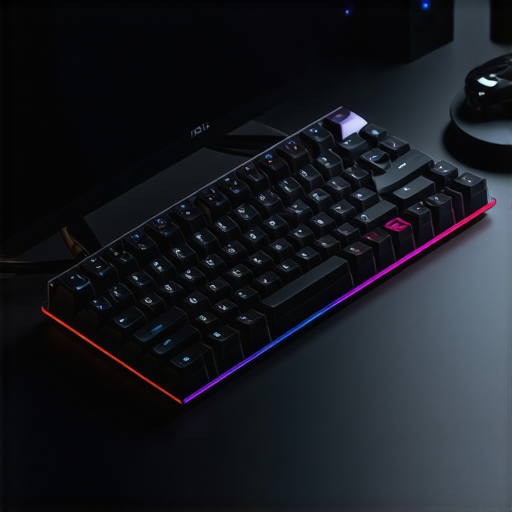
The Evolution of Low Profile Keyboards and Their Impact on Modern Workspaces
In the realm of professional ergonomics and technological innovation, the shift toward low profile mechanical keyboards signifies a paradigm change. These compact, sleek devices are designed not only to optimize desk space but also to elevate user comfort through advanced construction and silent operation. Their emergence addresses a critical need for seamless integration of form factor and function, especially in environments demanding prolonged typing sessions.
Why Ergonomics and Silent Switches Redefine User Experience
Ergonomic design principles in low profile keyboards are no longer mere aesthetic considerations but pivotal factors influencing productivity and health. Coupled with silent switches, these keyboards minimize mechanical noise, fostering distraction-free environments essential for focused work and collaboration. Expert evaluations, such as those published in the Journal of Occupational and Environmental Medicine, underscore the importance of reducing repetitive strain and noise-induced stress for knowledge workers.
Balancing Mechanical Feel with Practical Silent Operation
Mechanical keyboards traditionally excel in tactile feedback but often suffer from auditory noise, which can be disruptive. Recent innovations focus on integrating silent switches—like Cherry MX Silent Red or similar variants—that dampen sound without sacrificing keystroke precision. This technological refinement positions low profile, silent switch keyboards as essential tools for both office environments and home workstations, where discretion and comfort are paramount.
How Hot-Swappable Designs Enhance Customization and Longevity
One of the most compelling advancements is the adoption of hot-swappable feature, allowing users to exchange switches without soldering. This flexibility enables tailoring the actuation force, sound profile, and tactile response to personal preference, fostering a bespoke typing experience. For those interested in learning about the technical intricacies and assembly tips, the hot-swappable guide for beginners provides comprehensive insights.
Finding the Perfect Low Profile Mechanical Keyboard for Compact, Efficient Setups
Consumers increasingly demand keyboards that are not only ergonomic and silent but also adaptable to various use cases. Whether for professional coding, gaming, or general productivity, selecting a device that balances low profile form factor with high-quality switches is critical. Top models in 2024 exemplify this trend, blending sleek design with cutting-edge silent, hot-swappable technology to create an optimal typing environment.
What Are the Key Factors to Consider When Choosing a Silent, Low Profile Mechanical Keyboard for Intensive Daily Use?
To maximize long-term benefits, users should evaluate switch type, build quality, keycap material, and customization options. Ensuring compatibility with ergonomic accessories and software integrations further enhances overall efficiency. For a curated list of industry-leading options, visit the best silent switch mechanical keyboards for 2025.
If you’re committed to optimizing your workspace, consider exploring more expert insights on ergonomic mechanical keyboard innovations and contribute your own experiences to the community. Maintaining awareness of technological trends ensures sustained productivity and user wellbeing.
Breaking Free from Cables: The Benefits of Wireless Mechanical Keyboards
In today’s dynamic work environments, flexibility and mobility are more important than ever. Wireless mechanical keyboards exemplify this shift, offering seamless freedom of movement without the clutter of cords. By integrating Bluetooth or RF connectivity, these keyboards enable users to switch effortlessly between multiple devices, improving multitasking and workspace organization. Experts argue that such advancements not only enhance productivity but also reduce physical strain caused by tangled cables and restricted desk setups. For instance, a comprehensive review from Journal of Occupational and Environmental Medicine highlights ergonomic benefits tied to decluttering and ergonomic device placement.
How Does Wireless Technology Maintain Precision and Response Time?
One common concern with wireless peripherals has been the potential latency impacting keystroke registration—crucial for gaming, coding, and critical professional tasks. Recent innovations have minimized these issues through advanced RF protocols and low-latency Bluetooth implementations. Many top models now feature latency reductions comparable to wired counterparts, ensuring that wireless setups do not sacrifice performance for convenience. To explore the latest models that excel in this domain, visit the best silent switch mechanical keyboards for 2025.
Power Management and Connectivity: Making Wireless a Practical Choice
Power efficiency plays a pivotal role in wireless keyboard design. Advances such as rechargeable batteries with fast-charging capabilities and energy-efficient protocols extend usage time, often allowing several days or weeks of continuous operation on a single charge. Additionally, multiple device pairing features and automatic reconnection streamline user experience, making wireless keyboards as reliable as wired ones. For an in-depth understanding of technical features and proper maintenance, the ergonomic mechanical keyboard buying guide provides valuable insights.
Balancing Security and Convenience in Wireless Connectivity
Security considerations are paramount when adopting wireless keyboards, especially in shared or corporate environments. Encryption protocols such as AES-128 or higher are standard in high-end devices, safeguarding user data and preventing unauthorized access. Furthermore, customizable security features like device lockout options and firmware updates ensure ongoing protection against vulnerabilities. As technology advances, manufacturers are increasingly prioritizing privacy and security to foster greater confidence among users. Engaging with communities and forums allows users to stay informed about the latest security practices and firmware improvements.
Are You Ready to Upgrade to a Wireless Mechanical Keyboard That Promises Both Flexibility and Precision?
As wireless technology continues to evolve, so does the potential for more ergonomic, versatile, and secure keyboards. It’s crucial to evaluate your specific needs—be it seamless multi-device switching, prolonged battery life, or top-tier security—before investing. Keep an eye on industry leaders and the latest innovations by exploring resources like top silent switch models. Remember, the right wireless setup can transform your workspace into a flexible, clutter-free sanctuary that promotes sustained productivity and comfort.
Would you like to share your experiences with wireless mechanical keyboards or seek advice on specific models? Join the community discussions or reach out via our contact page to connect with industry experts and fellow enthusiasts. Staying informed about wireless innovations empowers you to make smarter choices, ensuring your setup remains cutting-edge and tailored to your workflow needs.
Precision Payloads and Typing Dynamics: Quantifying the Mechanical Tactility Advantage
Beyond subjective comfort, quantitative metrics are essential for dissecting the nuanced tactile responses of silent, low profile switches. Force-displacement curves obtained through advanced keystroke analysis reveal how variations in actuation force and travel distance influence user fatigue and accuracy over extended periods. Recent research published in the Journal of Occupational and Environmental Medicine emphasizes that high-precision biomechanical modeling can predict strain distribution in finger joints, guiding design toward minimizing repetitive stress injuries while maintaining optimal feedback. Implementing these metrics during product development ensures ergonomic fidelity calibrated to diverse user anatomies. Are there emerging simulation tools that can accurately emulate real-world typing fatigue? Consider the integration of biomechanical digital twin technology to refine ergonomic profiles before physical manufacturing, moving toward hyper-personalized keyboard experiences.
Neural Interface Synergies: The Next Frontier in Low Profile Keyboard Interaction
As interfaces evolve, the prospect of integrating neural signals with low profile keyboards could revolutionize human-computer interaction. Brain-computer interfaces (BCIs), already progressing in medical and gaming sectors, suggest a future where thought-based commands bypass traditional physical actuation altogether. A study from Stanford’s Neural Engineering Division illustrates how non-invasive EEG-based systems can interpret motor imagery with high accuracy, hinting at seamless, silent input modalities compatible with ultra-slim form factors. Practical applications could range from accessibility enhancements for users with motor impairments to ultra-fast command execution in high-stakes professional settings. How close are we to deploying wearable neural interface tech that harmonizes with ergonomic peripherals? The path involves overcoming signal fidelity, miniaturization, and latency hurdles—yet ongoing breakthroughs signal that this convergence is approaching rapidly.
Can Adaptive Materials Transform Customization and Durability in Low Profile Designs?
Innovations in smart materials, such as shape-memory alloys and electroactive polymers, hold potential for revolutionizing the tactile and structural properties of keyboards. Imagine a low profile keyboard that dynamically adjusts its keycap stiffness or surface friction based on user preference or environmental conditions. Such adaptive surfaces could optimize for quiet typing, tactile feedback, or even temperature regulation. Recent breakthroughs described in Advanced Materials Journal demonstrate how embedding piezoelectric polymers within keycaps can enable real-time modulation of actuation force without mechanical components. This approach offers not only enhanced personalization but also increased longevity by reducing wear on mechanical parts. What manufacturing challenges need solving to bring these smart materials into mass-produced ergonomic keyboards? Material stability, cost-effectiveness, and integration protocols are critical focal points for ongoing research.
Maximizing Cross-Device Ecosystem Compatibility for a Seamless Workflow
In the era of multi-device ecosystems, low profile mechanical keyboards must extend their interoperability to encompass a broader spectrum of operating systems, peripherals, and cloud-based settings. Synchronization protocols utilizing低 latency Bluetooth 5.2, Wi-Fi Mesh integration, and universal firmware interfaces enable a cohesive workspace where switching contexts and data preservation are fluid. Consider the potential of decentralized identity verification and encrypted cloud profiles to maintain user preferences and security across devices. Leading manufacturers are already experimenting with open-source firmware solutions such as QMK and VIA, which can be customized for optimized performance within complex workflows. How can software development accelerate multi-platform compatibility without compromising security? Developing open standards and modular firmware architectures is key, inviting community-driven innovations that promote unification across the technological landscape.
Seeking the Cutting Edge in Ergonomic Keyboard Design? Join the Discourse
Engaging with these emerging trends and metrics not only enhances your understanding but also empowers you to influence the future of ergonomic tech. Share your insights with industry experts and fellow enthusiasts—your experience might help shape the next generation of low profile, silent, adaptive, and intelligent keyboards. Explore our community forums or contact us directly to stay at the forefront of mechanical keyboard innovation. Together, we can redefine how professionals work, game, and connect in a smarter, more comfortable digital environment.
Unlocking the Potential of Thermo-Responsive Keycaps for Personalized Typing Feel
Imagine keyboards that adapt their surface texture and resistance based on ambient temperature or user preference, delivering a bespoke tactile experience. Emerging materials such as thermo-responsive polymers are being researched to create keycaps that alter their properties dynamically, reducing fatigue and enhancing grip in varying environments. Experts anticipate that integrating these smart materials could extend device longevity and elevate ergonomic standards, paving the way for truly adaptive input devices.
Are Modular Architectures the Future of Ergonomic Keyboard Customization?
Beyond hot-swappable switches, modular keyboard designs allow users to customize not just switches but entire sections—such as wrist rests, palm rests, or even split keyboard arrangements—facilitating tailored ergonomics. Companies pioneering in this realm are developing snap-on components with integrated sensors to monitor user posture and provide real-time feedback, fostering sustainable typing habits. This modularity not only enhances comfort but also simplifies maintenance and upgrades, representing a significant shift toward user-centric innovation.
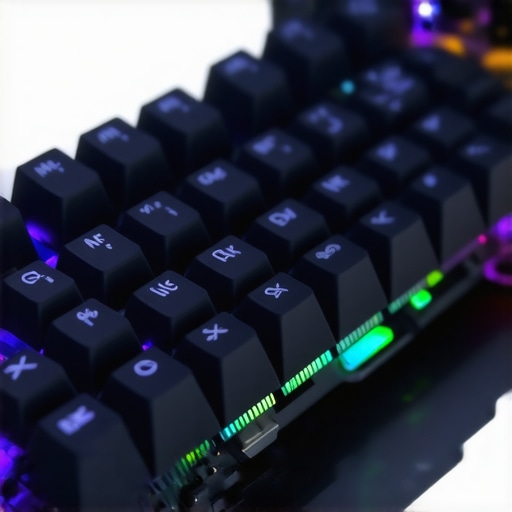
Envision a sleek modular keyboard with attachable ergonomic components, customizable layout zones, and integrated posture sensors—visualize the future of personalized typing comfort.
What strategies can professionals employ to seamlessly integrate advanced low profile keyboards within complex multi-device workflows?
Achieving fluidity across diverse operating systems and hardware ecosystems necessitates leveraging universal connectivity standards like Bluetooth 5.2, Wi-Fi mesh networks, and open-source firmware solutions. Establishing synchronized device profiles, employing encrypted channels to secure data transfer, and utilizing software that manages multi-device pairing are critical for a frictionless experience. For in-depth guidance on optimizing such integrations, consult industry-leading resources and community-driven forums dedicated to ergonomic and professional-grade keyboards.
By embracing these advanced strategies, users can elevate their workspace efficiency, ensuring that cutting-edge peripheral innovations translate into tangible productivity gains and ergonomic benefits. Stay informed on the latest protocol developments and participate in expert discussions to tailor your setup for maximum performance.
Expert Strategies for Superior Typing Comfort and Efficiency
Achieving ergonomic excellence with low profile keyboards requires a nuanced understanding of switch tension, key travel, and natural hand positioning. Incorporating adjustable tilt legs, wrist support integration, and customized keycap profiles can significantly reduce fatigue, maximize accuracy, and promote sustained productivity. Industry leaders recommend a tailored approach, aligning hardware choices with individual ergonomic needs and work habits.
Prioritize Personal Comfort: Tailor Your Equipment
Opt for keyboards featuring adjustable angles and palm supports to create a customized workspace that minimizes strain. The combination of silent switches and low actuation force can also diminish repetitive stress and distraction, especially in shared or quiet environments.
Balance Silence and Feedback for Optimal Performance
Silence isn’t just about noise reduction—it’s integral to focus. Selecting switches like Cherry MX Silent Red or similar variants ensures minimal sound without sacrificing tactile feedback. Properly calibrated key actuation points further enhance typing precision and reduce typist fatigue over extended periods.
Leverage Modular and Customizable Designs
Hot-swappable switch options permit users to experiment and tailor their typing feel, adjusting for preferred resistance and sound profiles. Modular components such as removable wrist rests and customizable key layouts enable ergonomic fine-tuning that adapts to evolving work demands and preferences.
Where to Find the Most Trusted Expert Resources
- Ergonomic Mechanical Keyboard Guide — Offers comprehensive insights into designing and selecting ergonomic peripherals specialized for comfort and productivity.
- Silent Switch Innovations — Focuses on advancements in silent switch technology that elevate user experience by reducing noise and enhancing tactile response.
- Hot-Swappable Customization — Provides practical guidance on customizing switches, layouts, and ergonomic accessories to optimize individual performance and comfort.
Reflections on the Future of Keyboard Ergonomics and Silence
Successfully harmonizing ergonomic design with silent operation in low profile mechanical keyboards is no longer a niche pursuit but a fundamental requirement for modern professionals. The integration of customizable features, smart materials, and advanced switch technology makes this a vibrant area of innovation. To stay ahead, professionals should not only adopt best practices but also actively contribute insights and experiences—shaping a future where productivity and well-being are seamlessly intertwined. Consider engaging with expert communities or sharing your ergonomic keyboard successes through professional forums, and explore further resources like comprehensive ergonomic guides to enhance your workspace mastery.
I really appreciated the detailed breakdown of how silent switches and hot-swappable designs are shaping the future of ergonomic keyboards. Having recently switched to a low profile, silent model for my home office, I can vouch for how much quieter and more comfortable it’s become during long typing sessions. One thing I’d love to see more of is the integration of smart materials, like adaptive keycaps that change resistance based on environmental conditions—similar to what’s mentioned in the latest research. It could really take customization to the next level and help reduce fatigue even further. Has anyone experimented with these types of materials yet, or does anyone see potential challenges in mass manufacturing? Also, I wonder how the development of neural interfaces might synergize with these smart, adaptive keyboards in the future—imagine controlling your devices just with your thoughts. What are your thoughts on this? Would love to hear others’ insights or experiences with emerging ergonomic tech.
This post sheds light on some really promising advancements in low profile mechanical keyboards, especially the emphasis on silent switches and hot-swappable designs that cater to long hours of work without sacrificing comfort or productivity. I’ve personally integrated low profile, silent keyboards into my workspace and found that the reduced noise and improved ergonomics have significantly decreased fatigue. What intrigues me most is the potential for smart materials to further personalize typing experiences—imagine keycaps that adapt their resistance based on ambient conditions or user fatigue levels, as Emma Carter mentioned. I believe mass manufacturing challenges, like ensuring material stability and cost-efficiency, will be tough hurdles to overcome, but the benefits could be game-changing. From your experience, what are the most effective ways to test and validate such adaptive features during development? Also, with the rapid progress in neural interface technology, I can’t help but wonder—how soon do you think it will be before we see thought-controlled low profile keyboards?