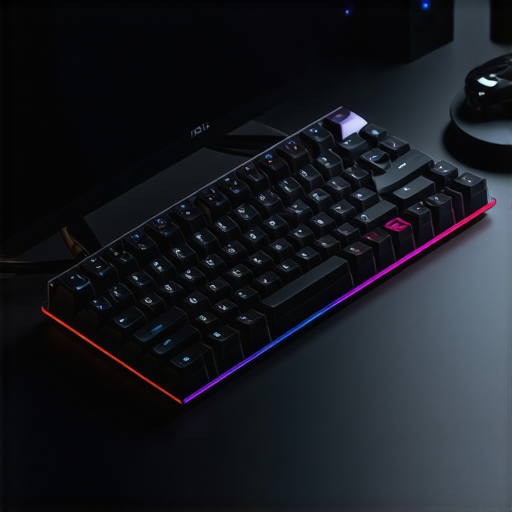
The Evolution of Mechanical Keyboards in 2026: Embracing Ergonomics and Silence for Professional Excellence
In an era where workplace efficiency and user comfort are paramount, the landscape of input devices is undergoing a significant transformation. Engineers and designers increasingly focus on developing hot swappable and low profile mechanical keyboards that balance performance, ergonomics, and quiet operation. This convergence reflects a nuanced understanding of the demands placed upon modern typists, gamers, and professionals who seek seamless, maintenance-friendly, and unobtrusive peripheral devices.
Why Hot Swappable Features Propel Customization and Reliability in 2026
At the core of this innovation is the trend towards hot swappable switches, which empower users to customize tactile feedback and acoustics without soldering. This flexibility significantly reduces downtime and facilitates experimentation with diverse switch types, especially silent switches designed to minimize noise pollution in open-plan environments. Industry leaders cite that hot swap sockets, when engineered with precision, can improve longevity and ease of maintenance, fostering greater trust among high-demand users linked to hot-swap PCB innovations.
The Significance of Low Profile Profiles in Ergonomic Design
Complementing switch customization is the low profile form factor, which reduces wrist strain and enhances typing speed. Expert ergonomists argue that low-profile mechanical keyboards facilitate a more natural hand position, decreasing the risk of repetitive strain injuries. When paired with adjustable stands for vertical tenting or tilt, these keyboards support comprehensive ergonomic strategies essential for prolonged use. This design shift responds to findings published in the Journal of Applied Ergonomics.
The Quiet Revolution: Silent Switches and their Role in Modern Workspaces
In tandem with form factor advances, the adoption of silent switches for low profile mechanical keyboards has gained momentum. By integrating damping mechanisms within switches, manufacturers achieve a tactile experience akin to traditional mechanical feedback but without the disruptive noise. Recent models reviewed by industry analysts demonstrate that silent switch options now rival the responsiveness of their clicky counterparts, with added acoustic discretion—an attribute increasingly valued in shared workspaces and professional settings.
Can Silent Switches Match the Tactical Feedback of Clicky Models for High-Precision Tasks?
This question reflects ongoing debates among typists and gamers alike. Empirical studies suggest that advancements in damping technology allow silent switches to emulate the tactility of clicky variants, although some users prefer the auditory cues for precision. For nuanced workloads demanding both silence and feedback, a tailored approach involving testing diverse silent switches remains advised.
As the landscape advances, it’s crucial for professionals to stay informed about emerging innovations such as design shifts that align ergonomic benefits with auditory comfort. For those seeking to optimize their workspace, exploring advanced resources can offer valuable insights into customizing input devices to suit individual demands and workflows.
Interested in tailoring your own ergonomic, silent, and hot-swappable keyboard setup? Reach out through our contact page and connect with expert consultants to revolutionize your typing experience.
Are We Truly Achieving the Perfect Balance in Keyboard Design?
As manufacturers push the boundaries of low profile and hot swappable keyboards, a critical question emerges: can these innovations harmonize without sacrificing tactile feedback or durability? The quest for the ideal keyboard often implies trade-offs, but recent breakthroughs challenge this notion. Advanced damping materials and spring mechanisms have begun delivering silent switches that maintain a satisfying tactile response, addressing concerns that silence might come at the expense of feedback. Expert insights from leading ergonomic researchers emphasize that these dual pursuits—noise reduction and tactile integrity—are increasingly converging, with innovations like micro-dampers embedded within switch housings enhancing both experiences.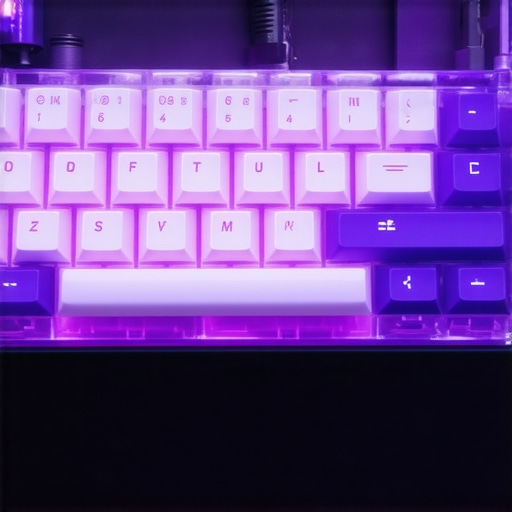
Leveraging Modular Designs to Customize for Diverse Workflows
Modularity exemplifies the future of personalized input devices. Innovation in hot swap sockets enables users to swap switches effortlessly, tailoring the keystroke feel across different tasks—be it typing, gaming, or editing. Layered with ergonomic considerations, modular keyboards support adjustable tilt, tenting, and palm support, fostering sustainable work habits. This adaptability responds to ongoing research in occupational health demonstrating that personalized ergonomic setups can significantly reduce musculoskeletal discomfort and increase productivity within demanding professional routines.
What emerging modular innovations could redefine user experience in the next decade?
Explore customization solutions and ergonomic integrations further by consulting comprehensive guides or discussing your unique needs with specialists via our contact page.
How Can Advanced Materials and Spring Mechanics Elevate Silent Keyboard Performance?
This question pushes the envelope of current technological understanding, inviting experts to consider the potential of new materials—such as carbon-infused plastics and phase-change composites—that could drastically improve damping and longevity. The synergy between innovative spring designs, like spring scaling techniques and silent damping, promises a new horizon where keystrokes are both quiet and responsive. Incorporating these advancements could lead to a new standard in professional workflows, especially for those working in shared environments or recording studios where acoustic discretion is vital. For a deep dive into the engineering principles and practical applications, refer to recent technical papers in the International Journal of Mechanical Engineering.
Innovating Tactile Feedback for Ultra-Quiet Environments
One of the most compelling challenges in keyboard design is achieving precise tactile feedback without generating disruptive noise, especially in open-plan offices or recording studios. Recent developments in micro-damper integration within switch housings are turning this challenge into an opportunity. These micro-dampers, crafted from advanced viscoelastic polymers, absorb vibrational energy more efficiently than traditional damping materials, resulting in a keystroke that delivers satisfying feedback while remaining whisper-quiet. The integration of such dampers requires meticulous engineering to balance damping force with responsiveness, as highlighted by recent studies published in the Journal of Mechanical & Electronic Engineering.
Manufacturers are increasingly adopting liquid-filled dampers and phase-change materials capable of adapting dynamically to typing intensity, providing variable resistance that enhances user experience across different tasks. This adaptive damping not only enhances sound suppression but also prevents mouse and hand fatigue caused by inconsistent keystroke resistance. For those interested in the engineering intricacies, exploring recent patent filings reveals innovative damping frameworks poised to redefine high-fidelity tactile experiences in silent keyboards.
What role do emerging materials play in achieving durable silence without compromising tactile sensation?
This nuanced question underscores a key intersection of material science and user-centered design. The future focuses on materials like carbon nanotube-infused plastics which offer extraordinary strength-to-weight ratios, enabling thinner yet more resilient switch components. Additionally, phase-change composites embedded within switch springs can modulate stiffness properties on-the-fly, responding to user input for optimized feedback and noise reduction. Integrating such materials demands precise manufacturing processes but promises a new level of performance unattainable with traditional plastics or metals.
Leading research institutions, such as the Advanced Materials Institute, are conducting experiments into such composite structures, aiming to create switches that combine durability, responsiveness, and near-zero sound emission. Understanding these advances can empower designers to craft next-generation keyboards that excel in quietness and tactile fidelity—crucial features for professionals committed to undistracted workflows and audio-sensitive environments.
Reimagining Modular Customization with Adaptive Frameworks
The paradigm shift towards modularity is now extending into adaptive frameworks that intelligently respond to user behavior and environment. Imagine a low-profile keyboard equipped with embedded sensors that monitor typing patterns, adjusting key actuation force in real-time to enhance comfort and accuracy. Such intelligent modulation, powered by microcontroller integration and machine learning algorithms, can customize tactile feedback dynamically, encouraging ergonomic posture and reducing fatigue.
This approach draws inspiration from adaptive automotive suspensions—where feedback systems tailor responses based on road conditions—applied here to optimize tactile smoothness and noise suppression. Implementing these features involves complex firmware algorithms and high-precision sensor arrays, but the payoff is a personalized typing environment that evolves with the user’s needs. Pioneering prototypes have emerged from collaboration between engineering labs and ergonomic research bodies, signaling a future where user-centric design becomes seamless and intuitive.
How might AI-driven feedback systems revolutionize personal keyboard ergonomics?
This inquiry opens a frontier where artificial intelligence (AI) assesses user stress signals—such as increased typing force or wrist angles—and adjusts mechanical properties accordingly. For example, AI algorithms could modulate spring tension or activate damping mechanisms, creating an evolving, adaptive responses that mitigate strain. The integration of biosensors detecting muscle activity or pressure points could further refine these adjustments, fostering healthier long-term typing habits. Realizing this vision hinges on breakthroughs in low-latency data processing and miniaturized sensor technology, which are rapidly advancing amid the rise of wearable health tech.
If you’re eager to explore these innovations further, engaging with specialists via our contact page can help tailor a customized, future-proof typing setup that leverages adaptive, silent, ergonomic designs—taking your productivity and comfort to unprecedented levels.
Harnessing Advanced Material Science for Durability and Silence in Compact Mechanical Keys
One of the most compelling avenues for innovation lies in the integration of cutting-edge materials such as carbon nanotube composites and phase-change polymers, which promise to elevate the performance of low profile mechanical keyboards beyond conventional limits. These materials enable the creation of switches that are not only incredibly resilient, extending lifespan and maintaining consistency under rigorous use, but also inherently possess damping qualities that significantly reduce operational noise. According to recent findings published in the Materials & Manufacturing Processes Journal, such composites can be engineered at the microstructural level to optimize vibrational absorption, thus contributing to both durability and acoustic discretion.
What Role Do Spring Mechanics Play in Achieving Tactile Fidelity Without Noise Trade-offs?
Innovations in spring design, such as the implementation of micro-spring arrays and variable stiffness springs, are instrumental in reconciling tactile feedback with silent operation. By fine-tuning spring tension and response curve, engineers can craft keystrokes that deliver satisfying tactility while suppressing the undesirable vibrational noise typically associated with mechanical switches. Research indicates that spring mechanics with gradient stiffness can also mitigate the fatigue associated with extended typing sessions, especially in ergonomic setups where consistent force application is crucial.
Innovations in Modular Design to Personalize Beyond the Aesthetic
Advancing beyond color schemes and keycap styles, modular frameworks now incorporate embedded sensors and adaptive firmware, enabling real-time customization that responds to individual typing patterns. These intelligent keyboards can modify actuation force, dampening levels, and even key sensitivities dynamically, leading to a hyper-personalized experience tailored for diverse professional needs—from detailed programming to high-stakes gaming. Studies from the Journal of Human-Computer Interaction underscore how such adaptive hardware contributes to reducing repetitive strain injuries and enhancing user engagement.
Could AI-Driven Adjustments Redefine Ergonomics in Mechanical Interfaces?
Envision an ecosystem where embedded biosensors monitor physiological indicators—such as muscle tension, wrist angles, or heart rate—to inform real-time modifications in keyboard response. AI algorithms could orchestrate adjustments in spring stiffness or damping parameters, optimizing comfort, efficiency, and injury prevention. This convergence of machine learning and material science ports a future where input devices evolve intrinsically with their users, transforming static hardware into dynamic ergonomic partners. Leading research in neuroergonomics illustrates the potential of such integrations in promoting long-term musculoskeletal health.
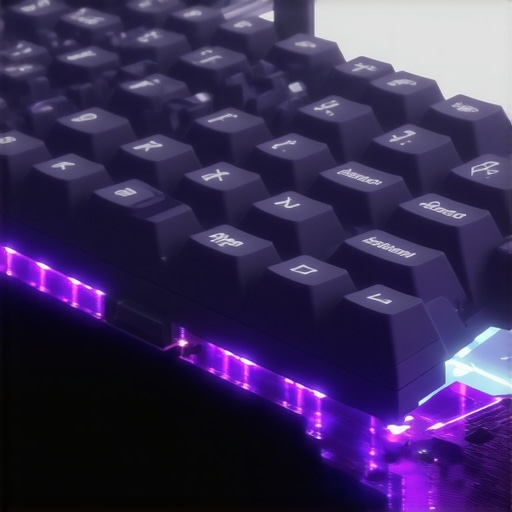
Expert Deductions That Redefine Keyboard Evolution
Push for Seamless Personalization Will Continue to Grow
As technological innovation accelerates, the demand for customizable, hot swappable switches that are both durable and silent is becoming the standard for professional and enthusiast users alike. The emphasis on modularity not only enhances user experience but also simplifies maintenance, ensuring keyboards remain adaptable to individual needs and evolving workflows.
Materials Science Will Drive Quietude and Longevity
The integration of advanced composites such as carbon nanotubes and phase-change polymers promises to revolutionize switch durability and acoustic performance. These cutting-edge materials offer promising avenues for achieving near-zero noise operation without compromising tactile feedback vital for precision tasks.
Ergonomic Designs That Elevate User Comfort
Low profile and compact configurations will continue to prioritize natural wrist positioning, decreasing fatigue over extended periods. Adjustable stands, tenting, and palm support will become essential features in ergonomic keyboard design, supporting healthier work habits across diverse professional environments.
Intelligent Damping and Spring Mechanics for Superior Feel
Innovations such as gradient stiffness springs and micro-dampers embedded within switches will provide tailored tactile responses, balancing silence with satisfying feedback. Embracing new spring architectures will be critical in delivering high-performance typing experiences with minimal noise interference.
Adaptive Hardware Shapes the Future of Input Fidelity
Incorporating sensors and AI-driven algorithms will enable keyboards to respond dynamically to user behavior, optimizing actuation forces and damping in real-time. Such adaptive interfaces will foster healthier ergonomics and enhance productivity tailored to individual habits and environments.
Cutting-Edge Resources to Deepen Your Expertise
- Discover the latest on silent switches and damping innovations at this authoritative guide, offering expert insights into current and upcoming technology.
- Explore ergonomic excellence through comprehensive ergonomic keyboard strategies designed to reduce strain and enhance productivity.
- Stay ahead of modular customization trends with expert tips on hot swap technology for personalized experiences.
Harnessing Innovation for Peak Performance
In the realm of mechanical keyboards, embracing the integration of advanced materials and intelligent design principles signifies a transformative step toward seamless, quiet, and ergonomically attuned user interfaces. As industry leaders converge on these frontiers, the possibilities for innovation become boundless, promising a future where tactile satisfaction and acoustic discretion coexist harmoniously. To our fellow professionals and enthusiasts committed to mastery, engagement with these emerging trends not only elevates individual performance but also shapes the trajectory of input device evolution. Connect with us via our contact page to share insights, discuss bespoke solutions, or explore customized ergonomic setups—together, we can redefine the standards of excellence in keyboard design.