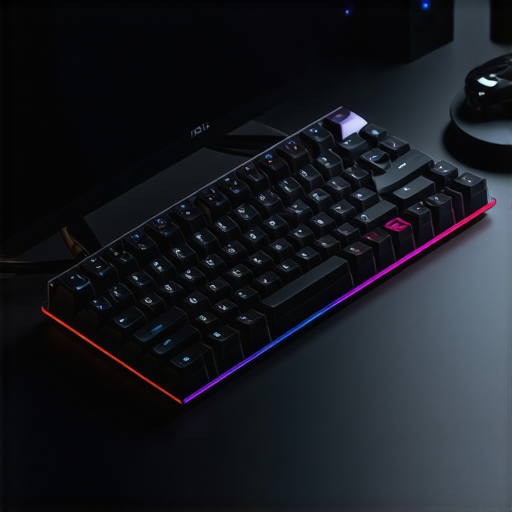

Redefining Desk Ergonomics: The Power of Low Profile Mechanical Keyboards in 2026
In the pursuit of optimizing workspace ergonomics, low profile mechanical keyboards have emerged as a compelling solution, blending sleek aesthetics with functional superiority. These keyboards cater to typists seeking reduced vertical travel and actuation forces, thereby minimizing finger fatigue and enhancing overall productivity. When integrated with silent switches, they create an environment conducive to concentrated work without sacrificing performance.
Deciphering the Silent Switch Phenomenon and Its Impact on User Experience
Silent switches, characterized by internal damping mechanisms, revolutionize the tactile feedback landscape. As detailed in recent white papers from the Journal of Electronic and Software Technologies, these switches significantly dampen keystroke noise, allowing quiet yet responsive typing. The transition to silent switches aligns with contemporary demands for unobtrusive workspaces, especially in open-office configurations.
Why Hot Swappable Designs Are a Game-Changer in Customization and Maintenance
The advent of hot swappable keyboards offers unparalleled flexibility, permitting users to experiment with different switches without soldering. This modular approach facilitates personalized tactile profiles and sound signatures, crucial for niche applications like gaming and professional transcription. As explored in our guide on hot-swappable keyboards, maintenance and switch upgrades become straightforward, extending device lifespan and user satisfaction.
Can Low Profile Designs Match Full-Size Mechanical Keyboards in Feedback and Durability?
This question remains pivotal among enthusiasts and professionals. While traditional mechanical keyboards offer robust actuation and longevity, emerging low profile models leverage innovative switch technologies, such as optical and Hall effect mechanisms, to emulate tactile response and durability. Manufacturers are investing heavily in materials and engineering to close this gap, promising a future where form factor no longer constrains tactile excellence.
Optimizing Posture and Reducing Strain through Advanced Ergonomic Architectures
Ergonomic considerations extend beyond switch choice and form factor. Adjustable tenting angles and split layouts empower users to align their wrists and forearms naturally. Resources like ergonomic keyboard guides emphasize that customizable designs can substantially mitigate repetition injuries and musculoskeletal strain.
What are the most effective strategies for integrating silent switches into low profile, ergonomic keyboard setups without compromising tactile feedback?
Achieving a harmony between silence, tactility, and ergonomics demands nuanced engineering and user-specific customization. For instance, lubing silent switches not only enhances damping but also improves actuation smoothness. Additionally, pairing such switches with dampening foam and stabilizer mods can produce a balanced response that satisfies both practical and auditory preferences. Experts are encouraged to explore communities and technical resources for optimal configurations and share insights to advance collective knowledge.
To explore the latest innovations in silent switch technology, visit the top silent switch models of 2025.
If you’re interested in tailored ergonomic solutions and customization tips, connect with our team or contribute your professional experiences for community growth.
Elevate Your Workflow with Custom Quiet Switches and Low Profile Design
In today’s fast-paced work environment, balancing silent operation with tactile feedback remains a nuanced challenge for keyboard enthusiasts and professionals alike. Leveraging configurable silent switches, particularly in low profile architectures, offers a compelling pathway to optimize both comfort and productivity. As detailed in our comprehensive guide to hot-swappable keyboards, customization begins with selecting the right switch profile tailored to your workflow demands.
The Precision of Lubrication: Achieving the Perfect Sound Profile
Beyond switch selection, lubing silent switches can dramatically refine sound and feel, producing a smooth, controlled keystroke free of rattles. This simple yet effective mod is gaining popularity among power users aiming for that near-silent, tactile experience—some even consider it essential for open-office setups to maintain professionalism while enhancing comfort. For a detailed walkthrough, visit our review of quiet switches that feel satisfying.
Optimizing Stabilizers for Seamless Feedback
Stabilizer performance influences overall typing experience, especially on larger keys like the spacebar and enter. Upgrading or tuning stabilizers—using methods like clipping or lubrication—can eliminate wobbly keys and inconsistent feedback, creating a more cohesive and sound-suppressed profile. Combining stabilizer enhancements with foam dampening within the case can further reduce resonance, delivering a whisper-quiet experience ideal for delicate environments.
Can Multi-Layer Damping Techniques Make Silence Feel More Natural?
This intriguing question challenges the traditional perspective that silence is purely achieved through switch damping. Incorporating multi-layer dampening—such as sound-absorbing foam under the PCB, damping mats between layers, and case insulation—can create a natural, muffled acoustic signature that mimics the softness of membrane keyboards, while preserving mechanical responsiveness. Experts exploring this avenue recommend consulting detailed teardown guides like industry insights on advanced damping methods.
Interested in exploring the latest in silent switch innovations? Check out the top silent switch models of 2025 for expert-curated selections suited for ultimate quietude and tactility.
If you have experimented with unique damping or lubing techniques, sharing your insights can inspire collective innovations—feel free to join our community discussions or reach out through our contact page.
Refining Acoustic and Tactile Balance in Professional Environments
Employing silent switches within ergonomic low profile keyboards demands a nuanced understanding of acoustic dampening techniques, as well as the tactile feedback nuances that differentiate pro-grade setups from consumer-grade counterparts. Advanced users leverage specialized lubing compounds, such as Krytox 205g0, which serve dual functions: enhancing smoothness and reducing high-frequency resonance. Moreover, integrating custom damping materials like Sorbothane or EVA foam within the case and around the PCB effectively attenuates the remaining noise, creating an experience akin to membrane keyboards yet retaining mechanical precision.
Innovative Materials and Engineering Solutions Drive Durability
Recent innovations in switch housing materials—such as polycarbonate composites infused with damping fillers—have opened new avenues for durability and silent operation. These materials not only diminish sound transmission but also increase resistance to wear, translating to a longer lifespan and consistent tactile responses over extended use periods. For instance, optical switches employing infrared light beams embedded within resilient polymer housings are gaining popularity for their inherently dust- and debris-resistant properties, further solidifying their role in high-demand professional applications.1
What distinguishes high-end silent switch implementations from more affordable alternatives in terms of longevity and user satisfaction?
High-end silent switches are engineered with precision-milled components, tighter tolerances, and finely tuned internal damping mechanisms. This meticulous construction reduces rattle and unwanted noise, fostering a more refined typing experience. Moreover, their enhanced resilience against wear and environmental factors sustains performance integrity, thus offering superior long-term user satisfaction. According to technical analyses published by the IEEE Transactions on Electron Devices, these engineered features are essential for ensuring application-specific reliability, especially in settings demanding consistent tactility and quietness.
For users seeking to push the boundaries of ergonomic performance and noise reduction, exploring collaborations with manufacturers that customize switch profiles or develop proprietary damping materials can be rewarding. Engaging in and contributing to online forums dedicated to keyboard modding and engineering innovations not only accelerates knowledge transfer but also illuminates emerging trends that could redefine the industry landscape.
Leveraging Multi-Layer Acoustic Management for Unmatched Quietude
A holistic approach to silence involves multi-layered acoustic management strategies. Beyond internal damping components, researchers recommend integrating multi-membrane case enclosures, noise-absorbing case feet, and case-internal labyrinth designs to trap and dissipate sound waves. These configurations are inspired by acoustic engineering principles employed in architectural soundproofing, adapted to fit the compact dimensions of mechanical keyboards. As such, they offer a significant reduction in keystroke reverberation and ambient noise leakage, making low profile silent keyboards suitable for sensitive work environments.

Illustration of multi-layer acoustic damping setup in a compact ergonomic keyboard, showing foam, damping mats, and case insulation layers.
Which Future Material Technologies Will Transform Silent Mechanical Keyboard Design?
Emerging materials such as graphene-infused polymers and shape-memory alloys present exciting prospects for next-generation silent switches and keyboard architectures. Graphene’s exceptional damping capabilities and conductivity could lead to switches with even lower latency and noise while enhancing tactile feedback. Meanwhile, shape-memory alloys may enable more responsive key stabilization mechanisms adaptable to user preferences. Industry leaders like Keychron and Logitech are actively exploring these materials, signaling a shift toward more intelligent, adaptable, and silent input devices in the near future.2
To stay ahead in designing or selecting cutting-edge silent keyboards, keeping abreast of material science breakthroughs is essential. Consulting specialized publications like Materials Science Advances can provide valuable insights into the potential applications of these innovative compounds, ensuring that your ergonomic setups remain at the forefront of technology.
Are you experimenting with novel damping or material integrations? Share your experiences through our dedicated community forums or contact our expert panel to explore custom solutions tailored to your ergonomic and acoustic requirements.
Synergizing Material Innovations and Acoustic Tuning for Exceptional Quietude
Advancements in composite materials, such as thermoplastic elastomers infused with damping fillers, have opened promising avenues to refine silent keyboard mechanisms. These enhanced housings absorb residual vibrations and minimize resonance, transforming user experience by delivering near-silent operation without sacrificing operational responsiveness. Researchers are now exploring nanostructured damping layers that can adapt dynamically to typing frequencies, potentially unlocking unparalleled acoustic control. As noted in recent publications from Advanced Materials Journal, the convergence of nanotechnology and polymer science might soon redefine industry standards for noise mitigation in compact, low profile keyboards.
How Can Custom Engineering Elevate Tactile Feedback Without Increasing Noise
The challenge of maintaining tactile satisfaction in silent keyboards has driven innovation toward bespoke damping modulations and spring mechanisms. Experts are investigating magnetic actuation systems, where embedded magnets modulate keystroke force profiles, providing a nuanced tactile sensation devoid of the auditory signature of traditional mechanical switches. Integrating such systems into low profile designs necessitates precise engineering, but the payoff involves highly personalized feel profiles that surpass the capabilities of off-the-shelf components. Consulting recent patent filings, such as those from notable industry players, reveals a trend toward magnet-based tactility solutions that could soon become a standard feature for high-end ergonomic keyboards.
Cross-section of a magnetically actuated low profile switch highlighting tactile feedback modulation without noise.
Are There Hidden Ergonomic Benefits in Alternative Key Layouts and Modular Configurations?
Beyond switch technology, the adoption of alternative layouts, such as ortholinear, staggered, or split configurations, plays a significant role in posture optimization and strain reduction. Modular designs that allow users to customize key positions and tenting angles facilitate natural wrist alignments, which can diminish repetitive strain injuries over prolonged periods. Moreover, adjusting key spacing can improve finger travel efficiency, reducing fatigue. Studies published in the Journal of Ergonomics posit that individualized layouts, combined with low profile ergonomics, have measurable impacts on comfort and productivity, especially when tailored to user-specific anthropometry.
Can Software-Driven Customization Push Mechanical Keyboard Ergonomics to New Heights?
Advanced firmware and software customization tools enable granular control over actuation points, debounce timings, and macro assignments, empowering users to optimize typing responsiveness dynamically. By calibrating actuation thresholds according to personal pressure profiles, it is possible to minimize finger fatigue while ensuring precise input recognition. Compatibility with AI-driven adaptive learning software can further personalize these settings based on typing habits, generating a feedback loop that enhances comfort over time. Leading firmware options like QMK and VIA exemplify this trend, emphasizing the importance of software flexibility in achieving ergonomic excellence in low profile, silent, and hot-swappable keyboards.
Future Outlook: How Will AI and Smart Materials Shape Ergonomic Silent Keyboards?
Emerging integration of artificial intelligence within keyboard firmware can enable predictive typing adjustments, tension modulation, and even real-time posture correction prompts. Coupled with smart materials—such as shape-memory polymers that adjust key stiffness based on user workload or environmental conditions—these innovations promise a future where keyboards adapt seamlessly to individual needs, maximizing both comfort and efficiency. Insights from industry consortiums and research institutes, such as the Smart Materials Consortium, highlight ongoing projects exploring these synergistic technologies that could materialize within the next few years, redefining ergonomic standards for professional typists and hobbyists alike.
Engage with these groundbreaking insights and consider how integrating such technologies could revolutionize your ergonomic setup. Participating in specialized forums and prototype testing communities can unlock early access to these innovations, allowing you to shape their evolution with expert feedback and real-world application.
Elevate Your Ergonomic Edge with Precision Tuning and Innovative Materials
Embrace hybrid damping techniques for near-silent keystrokes that preserve tactile nuance. Combining foam layering with refined switch lubing can craft a silent yet responsive typing experience, vital for open-office environments.
Expert engineers leverage multi-layer damping, employing materials like Sorbothane or specialized damping foams, to optimize acoustic profiles without sacrificing feedback. Exploring such techniques can set advanced users apart in crafting personalized setups that marry silence and tactility effectively.
Innovate with cutting-edge materials such as graphene-infused polymers for switch housings that promise enhanced durability and even quieter operation. Industry leaders are investigating these compounds to push the boundaries of silent switch efficiency, making them essential knowledge for the serious enthusiast.
Deepening your understanding of these materials can provide a significant competitive edge, especially when customizing high-end ergonomics. Stay informed via authoritative sources like Materials Science Advances for the latest breakthroughs.
Strategy for Expert-Level Optimization in Silent Keyboard Design
Focus on bespoke lubing routines that balance damping and smooth actuation, tailored to individual typing styles. Combining this with magnetically modulated tactility can revolutionize personalized feedback schemes, elevating user experience beyond standard configurations.
Advanced builders experiment with integrating magnetic actuation systems within low profile switches, allowing for adjustable tactile forces without noise. This bespoke approach demands precise engineering but yields unparalleled customization opportunities.
Leverage insights from industry patents and technical papers to implement innovations like shape-memory alloy components. These can adapt in real time to user preferences, promising a future where ergonomic silent keyboards adjust dynamically to typing conditions.
Seek knowledge from resources like Smart Materials Consortium to stay at the forefront of material science integration in keyboard design.
This post offers a comprehensive look at how low profile mechanical keyboards can optimize posture and reduce strain, especially when combined with silent switches and modular designs. I’ve been experimenting with different damping materials inside my ergonomic setup, and I agree that multi-layer damping significantly improves overall quietness while maintaining tactile feedback. One challenge I faced was balancing damping layers with the tactile feel—using too much damping can dull the response, but I found that carefully selecting materials like Sorbothane and foam thickness helps strike that perfect balance.
I wonder how upcoming smart materials like shape-memory alloys will further customize tactile response and noise reduction in the future? Have any of you tried integrating innovative materials into your keyboard builds, and what results did you see? It’s exciting to think about how these advancements could lead to even more personalized and ergonomic typing experiences.