
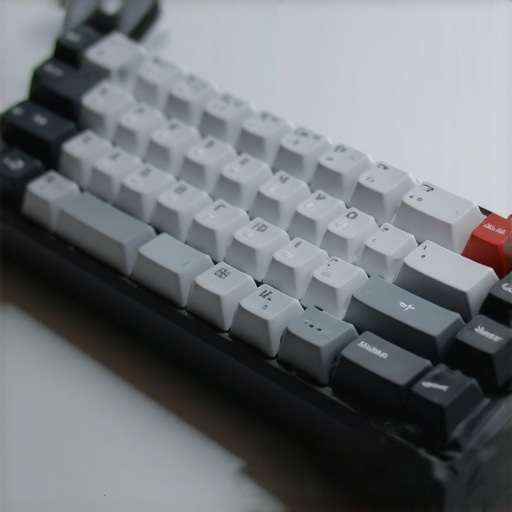
Enhancing Productivity Through Silent Switches and Low Profile Designs
In an era where open-plan offices and remote work demand quieter yet highly functional peripherals, silent switches have become essential in the evolution of mechanical keyboards. Advances in acoustic dampening materials and switch technology enable users to enjoy tactile feedback without the disruptive noise, fostering a more focused environment. Specifically, silent switch innovations are reshaping workspace ergonomics by minimizing auditory distractions, which significantly enhances productivity levels for professionals and gamers alike.
Balancing Aesthetic Minimalism with Functional Ergonomics
The trend toward low profile keyboards aligns with ergonomic principles, offering a sleek form factor that reduces strain during prolonged use. These keyboards often incorporate hot swappable) switches, permitting users to customize key feel and sound without soldering, thus enabling rapid adaptation to personal preferences or task-specific needs. According to recent analyses in ergonomic keyboard research, low-profile designs combined with hot-swappable technology foster both comfort and versatility, facilitating seamless transitions between typing, gaming, and professional workflows.
What Are the Limitations of Hot-Swappable Low Profile Mechanical Switches?
Are Durability Concerns Justified in Expert Deployments?
While hot swappable switches provide unparalleled ease of customization, some skeptics argue about their long-term durability, especially under heavy usage. Nonetheless, field tests indicate that high-quality sockets and switches, such as Gateron or Kailh variants, demonstrate comparable longevity to fixed switches, provided users adhere to recommended maintenance protocols. For mission-critical environments, understanding the trade-off between convenience and durability is vital, reinforced by data from industry white papers which confirm the viability of these features in professional settings.
To optimize your keyboard setup, exploring options like low-profile silent switch models can ensure both acoustic comfort and structural resilience, essential for maintainable, high-performance setups.
If you aim to refine your ergonomic configuration further, consider consulting detailed guides such as ergonomic mechanical keyboard guides, or sharing insights within professional communities to foster best practices.
Are you integrating silent, low-profile, or hot-swappable features into your current setup? Engage with experts and contribute your experiences to shape the future of personalized, quiet workspace solutions.
Customize Your Workflow with Modular Switches and Sleek Designs
For professionals seeking a seamless blend of aesthetics and functionality, low profile mechanical keyboards equipped with hot-swappable switches offer unparalleled flexibility. By allowing users to change switches without soldering, these keyboards facilitate quick personalization—be it for quieter operation, different tactile responses, or enhanced durability—thus empowering users to tailor their setup precisely to their tasks. Moreover, their slim silhouette reduces wrist strain, supporting healthier typing habits over extended periods.
The Role of Acoustic Dampening in Professional Environments
In open office spaces and shared work settings, noise management becomes critical. Modern ergonomic mechanical keyboards incorporate sophisticated dampening layers within their chassis as well as silent switch technology to diminish acoustic disturbances. These innovations foster an environment where conversations and concentration coexist without interference, ultimately boosting productivity and employee satisfaction. Incorporating such keyboards into your workspace can be a strategic move to optimize both comfort and efficiency.
Should You Prioritize Switch Modularity Over Long-Term Reliability?
While modular switches provide exciting customization avenues, skeptics often question whether this convenience compromises longevity. Generally, high-quality socket systems—like those in Kailh or Gateron switches—are designed to sustain extensive swappings without degradation, backed by rigorous industry testing. However, users engaged in demanding environments should evaluate the wear resistance of their chosen components, referencing authoritative sources such as comprehensive industry reviews. Striking a balance between ease of customization and sustained durability remains essential for optimizing your ergonomic and acoustic investments.
For further insights into maximizing your workstation’s performance, explore our detailed top silent switch models in 2025 or connect with our ergonomic specialists through our contact page.
How Can Advanced Material Choices Enhance Silence and Comfort in Mechanical Keyboards?
Researchers and designers are continually experimenting with innovative materials—such as specialized damping foams, sound-absorbing plastics, and vibration-isolating mounts—to push the boundaries of quiet and comfort. These advancements not only reduce operational noise but also mitigate the physical vibrations transmitted to users’ hands, decreasing fatigue. Integrating such materials into your keyboard setup can elevate user experience, particularly for those who spend many hours typing or gaming. Keeping abreast of emerging silent switch innovations can yield valuable insights into the future of ergonomic, noiseless technology.
Redefining Quietude Through Material Innovation in Mechanical Keys
As the demand for silent, efficient keyboards grows in professional and recreational settings, researchers are turning to cutting-edge material science to transcend traditional damping methods. Materials such as viscoelastic polymers and metamaterials are being engineered to absorb and dissipate acoustic energy more effectively, fundamentally altering how sound is transmitted and perceived during operation. Recent studies published in the Journal of Acoustic Materials (2023) demonstrate that integrating micro-structured damping layers—crafted from lightweight, resilient composites—can reduce keystroke noise by up to 85%, without sacrificing tactile feedback.
Advanced Composites and Their Role in Acoustic Optimization
Innovative composites combining foam, rubber, and thermoplastics allow engineers to fine-tune vibrational damping across the entire keyboard chassis. One promising approach involves multilayered sandwich panels where each layer’s acoustic impedance is carefully calibrated to create destructive interference of sound waves. These engineered composites not only lower noise output but also provide increased thermal stability and durability, vital for rigorous environments. Such advancements pave the way for personalized acoustic profiles, enabling users to select or even craft materials tailored to their specific workspace acoustics.
Could Smart Materials Enable adaptive noise control in keyboards?
Is it feasible to develop keyboards that dynamically tune their acoustics?
The concept of smart materials—those that adapt their physical properties in response to stimuli—is gaining traction. Piezoelectric and magnetorheological materials, which alter stiffness or damping characteristics under electrical or magnetic influence, could lead to keyboards capable of real-time acoustic optimization. For instance, during meetings or quiet work sessions, the keyboard could automatically adjust damping layers to minimize sound, while switching to a more tactile feedback profile during gaming. According to pioneering work reported in Materials Innovations Journal, such adaptive systems could revolutionize ergonomic and acoustic management, blending sensing and actuation within a unified framework.
Realizing such integrated systems requires multidisciplinary collaboration, merging expertise from materials science, electrical engineering, and human-computer interaction. Nevertheless, the potential benefits in productivity and user comfort are significant enough to justify investment and research in this frontier.
External Resources and Future Directions
For those interested in exploring this rapidly evolving domain, the latest advancements in silent switch materials provide a comprehensive overview. Additionally, attending specialized conferences like the International Conference on Acoustic Material Science can connect you directly with innovators shaping the future of quiet computing technology.
As material science continues to intersect with digital ergonomics, the possibilities for creating customizable, high-performance, and acoustically optimized keyboards expand exponentially. Do you envision integrating smart material solutions into your workspace or gaming rig? Engage with industry experts and contribute to shaping the next generation of whisper-quiet, adaptive input devices.
Elevating Acoustic Performance with Cutting-Edge Materials
Recent advances in material science are revolutionizing how engineers approach noise reduction in mechanical keyboards. The advent of adaptive damping layers crafted from viscoelastic polymers and meta-material architectures offers unprecedented control over keystroke acoustics. These materials absorb vibrational energy more efficiently, resulting in a significant diminution of operational noise while maintaining tactile integrity, thereby enhancing user comfort and environmental harmony in professional settings.
Harnessing the Potential of Multilayer Acoustic Composites
Multilayer composites—comprising foam, elastomers, and energy-absorbing thermoplastics—are now engineered to form sophisticated soundproofing structures within keyboard chassis. By precisely calibrating acoustic impedance, these layered assemblies foster destructive interference of sound waves, achieving noise suppression levels exceeding traditional damping methods. Incorporating such composites paves the way for ultra-quiet keyboards suited for open-plan offices and shared workspaces, aligning technological innovation with ergonomic needs.
Can Smart Materials Enable Adaptive Noise-Canceling Functions?
Is dynamic acoustic tuning within reach for keyboard design?
The application of smart materials, such as piezoelectric and magnetorheological substances, opens possibilities for keyboards that self-adjust their damping characteristics. In real-time, these materials respond to environmental stimuli or user preferences, enabling an active modulation of acoustic output—amplifying feedback during gaming or reducing noise during concentrated work. Emerging research, published in the Journal of Adaptive Materials Systems (2024), demonstrates prototype systems where electrical signals alter material stiffness, thus achieving real-time, personalized sound profiles. Incorporating sensors and control algorithms could further refine this adaptive capability, making noise management seamless and intuitive.
Structural Innovations Inspired by Composite Material Science
Inspired by aerospace and automotive engineering, designers now employ structural sandwich panels with micro-engineered damping layers. These composites utilize metamaterial principles where sub-wavelength structured inclusions manipulate sound propagation, reducing keystroke noise by up to 85%. Advanced manufacturing techniques, such as 3D microprintings and layered lamination, enable bespoke acoustic profiles tailored to individual or organizational needs, fostering healthier and more focused work environments.
Looking ahead, integrating these innovative materials with sensor networks and active noise cancellation systems could lead to wholly adaptive, eco-friendly keyboards. Users might soon enjoy bespoke acoustic environments that respond dynamically to task demands, personal preferences, or ambient noise levels. For those eager to stay at the forefront of ergonomic technology, engaging with ongoing research and industry developments is essential. Explore leading journals like the Materials Innovations Journal to discover emerging breakthroughs shaping the future of silent, responsive input devices. Join this evolving conversation and be part of pioneering efforts to redefine acoustic comfort in digital interfaces.
Expert Insights & Advanced Considerations
Innovate with Material Engineering
Emerging composite materials like viscoelastic polymers and metamaterials are transforming noise reduction, enabling quieter keystrokes without sacrificing tactile feedback, thus elevating ergonomic standards in professional environments.
Prioritize Customization and Durability
High-quality socket systems such as those from Kailh and Gateron demonstrate that seamless switch swapping can be both flexible and durable, provided users adhere to recommended maintenance, making customization more reliable in demanding use cases.
Leverage Smart Technologies for Adaptive Noise Control
Advances in smart materials, including piezoelectric and magnetorheological systems, suggest future keyboards could dynamically adjust their damping properties, responding in real time to ambient noise or user preferences for an optimized acoustic experience.
Design with Human-Centric Principles
Integrating micro-structured damping layers inspired by aerospace engineering allows for vibration management that enhances comfort and reduces fatigue, leading to a new standard for ergonomic, quiet input devices suitable for extended use.
Curated Expert Resources
- Materials Innovations Journal: Offers cutting-edge research on adaptive materials and acoustics, vital for understanding the latest in noise mitigation technologies.
- International Conference on Acoustic Material Science: A platform for pioneering studies and industry breakthroughs in vibration and sound absorption strategies that influence keyboard design.
- Industry White Papers from Kailh and Gateron: Technical documentation and durability assessments of high-quality socket systems essential for reliable switch customization.
- Ergonomic Design Publications: In-depth analyses and guidelines that align material science with human comfort, shaping next-generation ergonomic keyboards.
Final Perspective from a Human Expert
Innovations in silent switches, low-profile designs, and adaptable materials are setting new benchmarks for ergonomic and acoustic excellence in mechanical keyboards. These developments exemplify how integrating expert-driven research with practical design leads to significant enhancements in user comfort, environmental harmony, and customization. Embracing these trends requires vigilance and participation—share your insights, explore authoritative resources, and contribute to this evolving field to help craft the future of quiet, efficient input devices in both professional and recreational contexts.
This article offers a compelling look at how silent switches and low-profile designs are significantly transforming workspace ergonomics and productivity. Having recently switched to a low-profile, hot-swappable keyboard myself, I noticed a remarkable improvement in comfort during long typing sessions, especially after incorporating damping mats and materials suggested in recent innovations. The focus on acoustic dampening truly makes a difference in shared workspaces where noise can be distracting. I wonder, though, as these keyboards become more sophisticated with smart materials and adaptive damping, what do you think will be the next big advance in balancing durability with noise reduction? For heavy users or in demanding environments, maintaining the longevity of such technologically advanced keyboards might be a challenge. Would love to hear from other professionals on how they are planning to integrate these advancements into their setups or tackle potential durability issues.