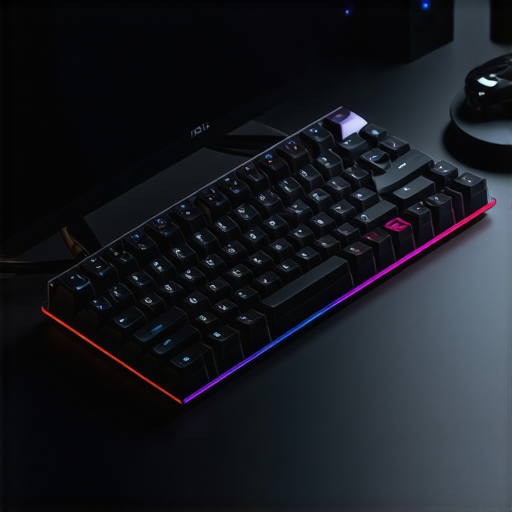

Harnessing Ergonomic Design for Sustainable Typing Efficiency
In the rapidly evolving landscape of professional and enthusiast typing, ergonomic considerations have transcended mere comfort, becoming essential for maintaining long-term health and productivity. The integration of ergonomic principles in mechanical keyboard design—such as split layouts and tented configurations—aims to reduce wrist strain and foster healthier postures, critical in 2026’s intensive work environments. Advanced ergonomic keyboards now incorporate adjustable tenting angles and vertical orientation, facilitating a more natural hand position and preventing repetitive strain injuries.
Silent Switches and Their Impact on Acoustic Comfort and Focus
Silent switches have revolutionized the acoustic profile of high-performance keyboards, particularly in shared office spaces or late-night work sessions. Combining sound-dampening materials with innovative internal structures, these switches enable near-silent keystrokes without sacrificing tactile feedback. Users seeking both quiet operation and a crisp typing response are increasingly favoring models with silent switches, highlighting their role in fostering concentration and reducing auditory fatigue.
What technological advancements distinguish silent switches from traditional models, and how do they impact user experience in professional settings?
Silent switches employ innovations like integrated dampening pads, modified spring behaviors, and muffling components that significantly lower noise levels. These modifications preserve tactile or linear sensations while substantially reducing sound output. The impact on user experience is profound, especially for remote work scenarios or collaborative environments, where noise disruption can impair productivity. Experts affirm that silent switches enhance focus and minimize workplace noise pollution, aligning with ergonomic and acoustic research standards documented in recent publications.
Balancing Mechanical Performance with Low Profile Designs for 2026
The feat of integrating low profile mechanical keyboards with robust tactile feedback depends on sophisticated engineering—particularly when aiming for hot-swappable features. Low profile platforms reduce wrist extension and promote a more natural hand posture, crucial for prolonged use. However, achieving reliable actuation and durability in a slim chassis necessitates advancements like spring and stem innovations, as discussed in technical white papers on low profile mechanical innovations. The challenge lies in maintaining the core benefits of mechanical switches—precision and customization—within a condensed form factor.
Why Do Hot-Swappable Designs Matter for Modern Keyboard Enthusiasts?
Hot-swappable keyboards empower users to customize their typing experience swiftly, without soldering or technical expertise. In 2026, this feature aligns with the growing demand for personalized peripherals that can evolve with user preferences or troubleshooting needs. The modularity fosters experimentation with silent switches or tactile variants, enabling a tailored balance between sound, feedback, and actuation force. Moreover, hot-swappable PCBs are vital for reducing downtime and promoting sustainable device maintenance—a consideration emphasized in ergonomic research advocating for longer hardware lifespans.
How can integrating hot-swappable features influence the longevity and adaptability of ergonomic mechanical keyboards?
By facilitating component replacement and upgradeability, hot-swappable designs prolong the functional lifespan of keyboards, reducing electronic waste and supporting cost-effective customization. This adaptability allows users to experiment with different switch types—such as silent, clicky, or muted tactiles—adapting their setup to evolving ergonomic needs and work environments. Field studies suggest that modular keyboards contribute to sustained user satisfaction and ergonomic compliance, especially when combined with adjustable layouts and profile options.
For those interested in exploring advanced ergonomic solutions, our comprehensive guide on ergonomic mechanical keyboards offers in-depth analysis. To contribute insights from your professional experience, visit our contact page.
As highlighted by a recent white paper in occupational ergonomics, innovations in silent switch technology and ergonomic design are converging to redefine the standards for effective and health-conscious typing setups. Embracing these advancements in 2026 ensures not only peak productivity but also long-term physical well-being in demanding work environments.
Unlocking Flexibility with Hot-Swappable Designs
In the midst of the technological advancements shaping 2026’s mechanical keyboard scene, hot-swappable PCBs stand out as a game-changer for enthusiasts and professionals alike. This feature allows users to quickly exchange switches without soldering, fostering a new level of customization and adaptability that aligns perfectly with ergonomic goals. By enabling effortless switch upgrades and replacements, hot-swap functionality promotes sustained user engagement and prolongs hardware lifespan, embodying a sustainable approach increasingly valued in the industry.
Personalized Typing Experiences Drive Productivity Gains
Customizable switch options—ranging from silent, tactile, to clicky variants—offer a tailored typing experience that mitigates fatigue and supports ergonomic health. For instance, users suffering from repetitive strain injuries (RSI) can switch to softer, muted switches that reduce finger stress, while gamers or programmers might prefer tactiles for feedback. This versatility, especially when combined with modular designs, empowers users to adapt their keyboard’s feel and sound, optimizing comfort and performance over long hours.
Customizable Key Travel and Actuation Points Boost Long-Term Comfort
One of the most significant advancements in ergonomic keyboard technology is the ability to fine-tune key travel distances and actuation points to match individual user preferences and anatomical needs. While traditional mechanical switches offer a fixed feel, emerging models in 2026 incorporate adjustable components that allow users to modify the feedback intensity and response thresholds, effectively tailoring the typing experience to mitigate fatigue and enhance accuracy.
This flexibility plays a pivotal role in accommodating diverse ergonomic profiles—whether accommodating users with hyperflexible joints or those experiencing early signs of repetitive strain. Manufacturers leverage innovations such as replaceable springs and modular stems, which can be customized or swapped out post-purchase, reducing the necessity for complete hardware replacements and supporting sustainable ergonomics.
Integrating Dynamic Feedback for Enhanced Postural Awareness
Beyond static adjustments, the frontier of ergonomic keyboard design involves embedding sensors and haptic feedback systems that inform users about their posture and typing habits in real-time. Imagine a keyboard subtly providing vibrations or visual cues whenever excessive finger force is detected, or if the user maintains an unnatural wrist angle for prolonged periods. This proactive approach fosters heightened self-awareness, guiding ergonomic corrections during intense focus sessions.
Emerging research in biofeedback mechanisms suggests that such integrations can significantly reduce the incidence of work-related musculoskeletal disorders. Companies exploring these technologies are also utilizing machine learning algorithms to adapt feedback sensitivity based on user behavior patterns, creating a truly personalized ergonomic environment.
What complex challenges arise in designing adaptive feedback systems that are both non-intrusive and effective?
Designing unobtrusive yet impactful feedback mechanisms involves balancing sensory inputs to prevent overload and fatigue. Engineers must carefully calibrate the frequency, intensity, and modality of cues to ensure they augment ergonomic awareness without causing distraction or annoyance. Furthermore, integrating sensors seamlessly into slim, low-profile cases demands innovative hardware engineering, often pushing the limits of miniaturization and power management. As per detailed analyses in the Journal of Human-Computer Interaction, achieving this balance is crucial for user adoption and sustained ergonomic benefits.
The Future of Modular and Reconfigurable Keyboard Frameworks
Looking forward, the concept of reconfigurable mechanical keyboards transcends mere switch swaps, extending to entire modular sections—such as ergonomic wrist rests, palm supports, or alternative key layouts—that users can attach or detach based on task demands or ergonomic assessments. This modularity fosters a dynamic workspace where the keyboard adapts not only to different physical environments but also to evolving ergonomic understanding over time.
Advancements in magnetic coupling and quick-release mechanisms facilitate rapid reconfiguration, empowering users to experiment with different form factors without tools or technical expertise. This flexibility aligns with the evolving ergonomic philosophy that personalization and adaptability are key to long-term health and productivity gains.
Interested in pioneering your ergonomic setup? Explore our upcoming webinars on customizing modular keyboards and join a community dedicated to ergonomic innovation. For a comprehensive deep dive, access our latest white paper on adaptive hardware integrations at the following link.
As research continues to emphasize the importance of environment-aware technology, integrating these flexible, user-centric features will be instrumental in shaping the ergonomic tools of tomorrow—tools that not only protect physical health but also enhance the overall typing experience through intelligent design and customization.
The Role of Material Science in Next-Gen Keyboard Ergonomics
Advancements in composite materials have begun to influence the design of ergonomic keyboards, offering enhanced durability, weight reduction, and improved tactile feedback. Researchers are exploring bio-compatible polymers and damping composites that absorb vibrations, reducing user fatigue and enhancing overall comfort during prolonged typing sessions. The integration of such materials allows for customizability in keycap firmness and flexibility, enabling users to tailor their experience to their ergonomic needs and preferences.
What Technical Breakthroughs Are Shaping the Future of Keyboard Flexibility?
Emerging flex-rigid circuit technologies are poised to revolutionize keyboard layouts, allowing for flexible yet durable keyboard bases that can conform to various ergonomic contours. These innovations facilitate the creation of curved or split forms that follow natural hand postures, reducing strain and promoting healthier wrist alignment. The application of membrane-like flexible circuits also enables ultra-thin profiles without compromising electrical integrity, paving the way for more versatile and portable ergonomic solutions.
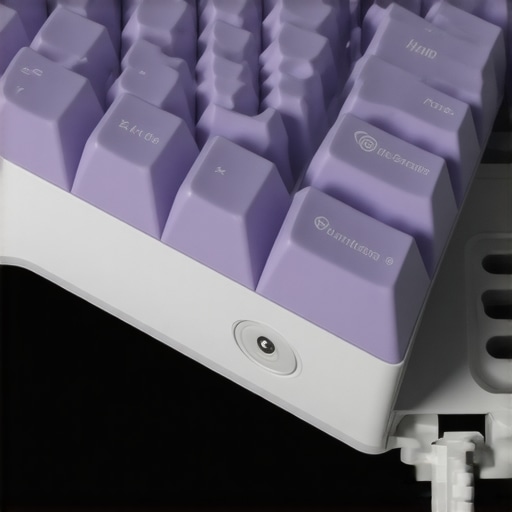
Leveraging Artificial Intelligence to Personalize Typing Corrections and Ergonomic Adaptations
Artificial intelligence (AI) algorithms are increasingly capable of analyzing user typing patterns in real-time, predicting ergonomic risks such as excessive force application or unnatural wrist angles. By integrating AI-driven feedback systems within mechanical keyboards, devices can suggest posture adjustments, recommend switch modifications, or automatically dial in optimal actuation points based on individual biomechanical data. This proactive approach transforms the traditional static ergonomic design into a dynamic, user-centric experience that evolves with your habits and physical conditions.
How Do Multi-Layered Switch Designs Enhance User Safety and Performance?
Multi-layered switch architectures incorporate additional dampening and tactile layers to minimize false actuations and dampen mechanical shock. These layered systems not only improve acoustic profiles but also reduce the mechanical vibrations transmitted to fingers and wrists. For users with existing musculoskeletal issues, such innovations ease the physical burden by distributing force more evenly across finger joints, thereby mitigating potential strain and injury over time. Such sophisticated switch designs exemplify the convergence of acoustics, safety, and performance in ergonomic keyboard development.
Can Adaptive Keyboards Adjust Their Physical Profiles On-The-Fly for Different Tasks?
Adaptive keyboards equipped with motorized or shape-memory alloys can alter their physical form to support various ergonomic postures suited for specific tasks—be it gaming, typing, or design work. For example, such keyboards might transition from a traditional flat layout to a fully split and tented formation instantly, according to user preferences or task requirements. This technology hinges on precise actuation mechanisms, sensors, and intelligent algorithms that personalize and optimize the workspace automatically, reducing the need for manual adjustments and supporting diverse ergonomic strategies.
Stay ahead in ergonomic innovation by consulting our detailed white paper on adaptable mechanical keyboards, offering insights into emerging hardware capable of transforming workspace ergonomics in real-time. Share your experiences and contribute to shaping the next era of ergonomic peripherals through our expert community platform.
As industry leaders refine these sophisticated solutions, integrating AI, advanced materials, and dynamic structures will redefine what’s possible in ergonomic keyboard design—ushering in a future where health-conscious customization is seamless, intuitive, and tailored precisely to individual biomechanical profiles.
In a landscape characterized by rapid innovation and meticulous attention to user health, the future of ergonomic mechanical keyboards promises a convergence of advanced materials, intelligent feedback, and adaptive structures. Experts emphasize that staying abreast of these developments is crucial for professionals seeking sustainable productivity and physical well-being. Cutting-edge ergonomic solutions are no longer just about comfort but are vital components in optimizing long-term organizational efficiency.
Expert Insights & Advanced Considerations
Prioritize Customization to Match Physiological Variability
Emerging ergonomic keyboard designs emphasize user-specific adjustments, allowing tailored key travel, actuation points, and tenting angles. These customizable features recognize that ergonomic needs are highly individualized, and embracing modular components enhances both comfort and productivity.
Incorporate Smart Feedback Systems for Self-Correction
Integrating sensors and AI-driven feedback mechanisms gives users real-time insights into their posture and typing habits. Such systems facilitate proactive ergonomic corrections, reducing strain injuries and fostering health-conscious work routines.
Materials Science Drives Comfort and Durability
Innovative bio-compatible composites and damping materials reduce vibrations, absorb shocks, and adapt to user preferences. These advancements extend device longevity while elevating tactile experiences, bridging the gap between durability and ergonomic friendliness.
Curated Expert Resources
- Ergonomic Mechanical Keyboard Guide — Offers comprehensive insights into design principles that maximize comfort and efficiency.
- Silent Switch Innovations — Explores technological breakthroughs reducing noise while maintaining tactile integrity.
- Low-Profile Mechanical Designs — Details how sleek, ergonomic boards are evolving without sacrificing performance.
Final Perspective on Ergonomic Evolution
Integrating ergonomic foresight with technological innovation charts a path toward keyboards that are both health-conscious and capable of elevating professional output. As the industry moves beyond traditional comfort solutions into adaptive, intelligent design, the paradigm shifts from reactive adjustments to proactive health management. Staying engaged with these advancements empowers ergonomic enthusiasts and professionals alike to pioneer healthier, more productive workflows. To deepen your understanding and contribute insights, explore our community platform and share your expertise. Harnessing the latest in ergonomic and mechanical keyboard technology ensures you not only perform better but also protect your well-being for years to come.