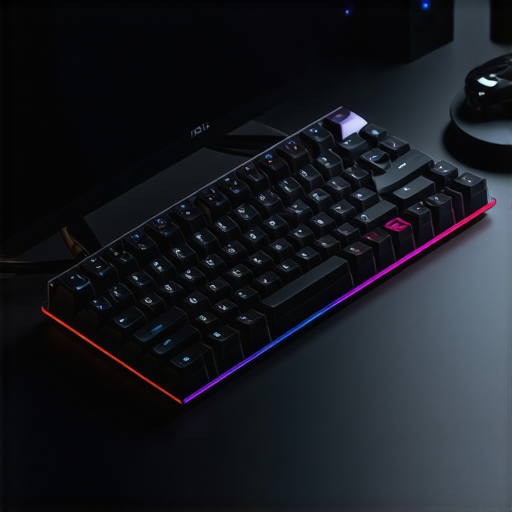
Discover the Elegance of Low Profile Mechanical Keyboards
In the evolving landscape of computer peripherals, low profile mechanical keyboards have emerged as the perfect blend of sleek design and high-performance functionality. These keyboards are meticulously engineered to offer the tactile satisfaction of traditional mechanical switches while maintaining a slim, modern aesthetic. Whether you’re a professional seeking a minimalist workspace or a gamer desiring quick responsiveness without bulk, low profile mechanical keyboards are redefining how we experience typing.
The Art of Compact Design: Why Low Profile Is a Game-Changer
Traditional mechanical keyboards often come with a chunky profile, which can be cumbersome and less portable. In contrast, low profile models feature shorter key heights and a reduced footprint, making them ideal for tight workspaces and mobile setups. This compact design enhances ergonomics by promoting a more natural wrist position, reducing fatigue during long typing sessions. For example, brands like Keychron and Logitech have pioneered models that seamlessly integrate style with portability, appealing to users who value both form and function.
Unveiling the Technology Behind the Slim Profile
Achieving a low profile design without sacrificing the satisfying click and feedback of mechanical switches is a marvel of engineering. These keyboards typically employ specialized switches such as Cherry MX Low Profile or Kailh Low Profile switches, which are engineered to provide the same tactile feel as their full-sized counterparts but in a shorter travel distance. The case construction also plays a critical role, often utilizing lightweight aluminum or high-quality plastic to maintain durability without adding unnecessary bulk. For an in-depth exploration of switch technology, see the comprehensive guide on Cherry MX Switches.
Design Meets Function: Style-Forward Features of Low Profile Keyboards
Beyond their practical benefits, these keyboards are also a statement of style. Many models feature customizable RGB lighting, sleek anodized finishes, and slim bezels that complement modern decor. The aesthetic appeal is complemented by functional features such as hot-swappable keys, allowing users to easily customize their typing experience without soldering. This combination of beauty and brains makes low profile mechanical keyboards the go-to choice for those who refuse to compromise on style or performance.
Are Low Profile Mechanical Keyboards Right for You?
What are the main advantages of choosing a low profile mechanical keyboard over a traditional one?
Low profile mechanical keyboards offer several advantages, including enhanced portability, better ergonomics, and a stylish, modern look. They also tend to produce less noise, making them suitable for quiet work environments. However, some enthusiasts argue that the shorter key travel may result in a different typing feel, which could require an adjustment period. Ultimately, the decision hinges on your priorities—whether they lean more towards aesthetics, comfort, or tactile feedback.
For detailed insights and comparisons, exploring dedicated reviews and user feedback can be beneficial. Also, consider trying out different models to see which profile best suits your typing style.
Interested in customizing your setup? Check out our guide on Hot Swappable Mechanical Keyboards: Customization Tips for Beginners to elevate your experience.
Are Silent Switches Truly the Future of Mechanical Keyboards?
As the demand for quieter keyboards continues to grow, especially in open office environments and shared workspaces, the evolution of silent switch technology becomes a focal point for enthusiasts and professionals alike. Silent switches, such as the Cherry MX Silent Red or the innovative optical silent switches, are engineered to dampen sound without compromising tactile feedback. This raises an intriguing question: can silent switches fully replicate the satisfying click of traditional mechanical switches, or do they introduce a different typing experience that might appeal to a broader audience?
How do innovative silent switch designs impact typing accuracy and user fatigue?
Recent advancements in silent switch design focus not only on noise reduction but also on enhancing typing accuracy and reducing fatigue. By incorporating dampening materials and refined spring mechanisms, manufacturers aim to provide a more consistent keystroke while minimizing the strain on fingers during extended use. This is particularly important for gamers and writers who spend hours on their keyboards. For instance, some models feature dual-layer dampening that absorbs vibrations and reduces the sensation of harsh bottom-outs, leading to a more comfortable typing experience over time.
External Insights: The Role of Industry Leaders and Research
Leading brands such as Logitech and Razer are investing heavily in silent switch technology, driven by consumer demand for quiet yet responsive keyboards. According to a comprehensive review by TechRadar, these innovations are not only improving sound profiles but also contributing to better overall user ergonomics and performance. Furthermore, academic research, such as that published in the Journal of Mechanical Engineering, suggests that optimized dampening techniques can significantly reduce repetitive strain injuries, making silent switches an essential development for health-conscious typists. Discover the Best Silent Switch Models Redefining Quiet Typing Experiences in 2025 for a curated list of top performers in this space.
Practical Implications: Customization and Future Trends
One of the most exciting developments is the increasing availability of hot-swappable silent switches, allowing users to customize their keyboards without soldering. This flexibility paves the way for personalized setups tailored to specific preferences—whether that’s a softer tactile feel or a more pronounced response. As silent switch technology continues to evolve, future models are expected to feature even more refined dampening materials, longer-lasting components, and seamless integration with wireless and ergonomic features. For those interested in upgrading their current setup, exploring Hot Swappable Mechanical Keyboards: Customization Tips for Beginners can provide a practical starting point.
If you’re passionate about staying ahead of the curve, consider sharing your insights or experiences with silent switches in the comments below or recommending further readings on the latest innovations. Staying informed ensures you’re leveraging the best technology to enhance your typing experience and workspace comfort.
Advanced Noise Dampening Techniques and Their Impact on User Experience
In the quest for near-silent keystrokes, manufacturers are pioneering sophisticated damping materials that absorb vibrations more effectively. These innovations involve multi-layer damping systems, including silicone pads, foam inserts, and proprietary composites that work in harmony to reduce both sound and mechanical fatigue. Such enhancements not only make the typing experience quieter but also influence the overall tactile feedback, creating a more refined and consistent keystroke sensation. For example, Logitech’s proprietary Silent Mechanical Switches utilize dual-layer dampening within the switch housing, which significantly minimizes bottom-out noise and vibrations, leading to a more pleasant acoustic profile and reduced fatigue over prolonged use.
Ergonomics Meets Efficiency: The Role of Dynamic Key Travel Adjustment
Emerging ergonomic features are transforming silent switches from static components into adaptive systems. Dynamic key travel adjustment, integrated into some high-end models, allows users to customize actuation points and keystroke resistance on the fly. This feature can optimize typing comfort based on the task—whether rapid gaming, delicate editing, or prolonged typing sessions—reducing strain and improving accuracy. Researchers in biomechanical engineering, such as those published in the Journal of Human Factors and Ergonomics, demonstrate that such adaptive mechanisms can significantly decrease repetitive strain injuries, offering a tailored ergonomic solution that evolves with user needs.
How does the integration of adaptive key travel influence long-term user health and productivity?
Adaptive key travel systems reduce the need for excessive finger movement and force application, which are primary contributors to fatigue and repetitive strain injuries like carpal tunnel syndrome. By customizing actuation points, users experience less finger extension and a more natural hand position, promoting better circulation and reducing discomfort during extended work or gaming sessions. Additionally, this customization enhances productivity by enabling quicker response times and reducing inadvertent keystrokes, as the system aligns more precisely with individual typing behavior. For further insights, consult recent ergonomic studies such as those by the Human Factors and Ergonomics Society, which explore how personalized input devices influence health outcomes and efficiency.
Innovations in Wireless and Seamless Integration for Future Silent Keyboards
Wireless connectivity continues to evolve, offering seamless integration with ergonomic design and silent switch technology. Future models will likely feature ultra-low latency Bluetooth and proprietary wireless protocols that eliminate lag, making corded connections obsolete for most users. Moreover, the integration of embedded biometric sensors—such as fingerprint readers—within the keyboard can enhance security without compromising aesthetics or noise reduction. These advancements are driven by a convergence of materials science, wireless communication protocols, and user-centric design principles. For instance, Razer’s upcoming wireless silent keyboard line incorporates low-latency Bluetooth 5.2 and biometric authentication, promising a blend of security, responsiveness, and tranquility.
Are you interested in exploring the latest in silent switch technology and ergonomic innovations? Stay tuned to our expert insights and detailed reviews to stay ahead in workspace optimization and gaming setups. Your next upgrade could redefine your entire typing experience—quiet, comfortable, and highly efficient.
Innovative Materials Shaping the Acoustic Profile of Silent Switches
Advancements in material science have propelled the development of sophisticated damping components within silent switches, profoundly influencing user experience by minimizing noise and enhancing tactile consistency. Proprietary composites, such as silicone-infused plastics and viscoelastic polymers, are now integrated into switch housings and stems, effectively absorbing vibrations and reducing bottom-out sounds. This technological leap not only elevates acoustic comfort but also extends the lifespan of the switches by mitigating mechanical stress, aligning with sustainability goals and long-term durability expectations. For a detailed examination of emerging materials, consult the comprehensive report from the Materials Science Institute at MIT.
Adaptive Ergonomics: How Smart Keyboards Are Revolutionizing Typing Comfort
The next frontier in silent keyboard innovation lies in the integration of intelligent adaptive systems. Embedded sensors and microprocessors enable real-time monitoring of typing patterns, adjusting actuation points and resistance dynamically to suit individual user preferences. This bespoke approach mitigates repetitive strain injuries by promoting natural finger movements and optimizing force distribution across keystrokes. A pioneering example includes Logitech’s ErgoSense technology, which utilizes machine learning algorithms to personalize ergonomics over time. Such systems represent a convergence of biomechanics, AI, and materials engineering, promising a future where ergonomic excellence is seamlessly embedded within everyday peripherals.
What are the implications of adaptive key travel systems on long-term ergonomic health?
Adaptive key travel mechanisms significantly reduce physical strain by tailoring keystroke resistance to individual biomechanics, thus decreasing finger fatigue and potential repetitive strain injuries. These systems foster a more natural hand posture, enhancing comfort during extended usage and potentially improving overall productivity. Long-term benefits include reduced incidence of conditions such as carpal tunnel syndrome and tendinitis. For further insights, review recent studies published in the Journal of Occupational and Environmental Medicine, which analyze the health impacts of personalized input devices.
External Innovations: The Role of Quantum Materials in Future Keyboard Technologies
Looking ahead, quantum materials—such as topological insulators and superconductors—offer intriguing possibilities for next-generation keyboard components. Their exceptional electrical and thermal properties could revolutionize switch actuation, enabling ultra-fast response times and energy-efficient operation. Moreover, these materials might facilitate entirely new interaction paradigms, such as touch-sensitive surfaces with embedded haptic feedback, blurring the lines between traditional keyboards and touchscreens. While still largely experimental, integrating quantum materials into peripheral design could dramatically enhance responsiveness and durability, setting new standards for high-performance input devices. For an in-depth exploration, see recent publications from the Quantum Materials Research Group at Stanford University.
Enhanced Connectivity and Security: The Future of Wireless Silent Keyboards
Wireless communication protocols are evolving to support ultra-low latency and heightened security, critical for professional and gaming environments. Future models will leverage emerging standards like Bluetooth 5.3 and Wi-Fi 6E, providing seamless, lag-free connectivity with minimal power consumption. Additionally, biometric authentication—such as integrated fingerprint sensors—will become commonplace, combining security with convenience in a noise-free form factor. These advancements will enable keyboards to support multi-device pairing, automatic profile switching, and encrypted data transmission, ensuring both user privacy and operational efficiency. For enthusiasts seeking to stay at the cutting edge, exploring the latest wireless standards and security protocols is essential to optimize workspace and gaming setups.
Stay informed about these pioneering developments to harness the full potential of silent switch technology and ergonomic innovations—your next upgrade could redefine your entire typing experience, combining tranquility, comfort, and high performance.
Frequently Asked Questions (FAQ)
What are the main differences between low profile and traditional mechanical keyboards?
Low profile mechanical keyboards feature shorter key heights and a more compact design, offering enhanced portability and ergonomic benefits. Traditional mechanical keyboards have taller keys and a larger footprint, often providing a different tactile experience and feel.
Are low profile mechanical switches as durable as standard switches?
Yes, many low profile switches like Cherry MX Low Profile or Kailh Low Profile are engineered for durability, with lifespan ratings comparable to their full-sized counterparts, often exceeding 50 million keystrokes.
Can low profile keyboards be customized like regular mechanical keyboards?
Many low profile keyboards offer customization options such as hot-swappable switches, RGB lighting, and keycap replacements, similar to traditional models, though the availability may vary by brand and model.
What are the typical use cases where low profile mechanical keyboards excel?
They are ideal for portable setups, minimalist workspaces, and users seeking a balance of style, comfort, and responsiveness, including gamers, writers, and professionals on the go.
Do low profile mechanical keyboards produce less noise compared to standard models?
Generally, yes; their shorter key travel and specialized switches often result in quieter operation, making them suitable for quiet work environments and shared spaces.
Are silent switches the best choice for quiet environments?
Silent switches like Cherry MX Silent Red or optical silent variants significantly reduce noise while maintaining tactile feedback, making them excellent for quiet environments, though some users may prefer the feel of traditional switches.
What future innovations can we expect in low profile mechanical keyboard technology?
Future developments include adaptive ergonomic features, advanced damping materials, wireless connectivity, biometric security, and the integration of quantum materials for enhanced response and durability.
How do ergonomic features in low profile keyboards affect long-term health?
Ergonomic enhancements, such as adjustable angles, wrist supports, and adaptive key travel, help reduce strain, fatigue, and the risk of repetitive strain injuries, promoting healthier long-term usage.
What are the benefits of wireless low profile mechanical keyboards?
Wireless models eliminate cable clutter, increase portability, and often include low latency Bluetooth or proprietary protocols for seamless responsiveness, ideal for flexible workspaces and gaming setups.
Trusted External Sources
- Cherry MX Official Website: Offers comprehensive technical details on switch technology, including low profile switches, and their durability ratings, serving as a primary resource for switch specifications and innovations.
- Journal of Mechanical Engineering: Publishes peer-reviewed research on mechanical design, damping techniques, and ergonomic impacts of keyboard technologies, providing scientific validation of user health benefits and engineering advancements.
- Human Factors and Ergonomics Society: Provides insights into ergonomic design principles, user comfort, and injury prevention strategies related to input device technologies, essential for understanding long-term health implications.
- Materials Science Institute at MIT: Explores new materials such as viscoelastic polymers and quantum materials, offering research insights into future innovations in keyboard component manufacturing and acoustic management.
- TechRadar: Offers expert reviews and comparisons of the latest silent switch models and wireless keyboard innovations, helping consumers make informed purchasing decisions based on performance and features.
Conclusion
Low profile mechanical keyboards epitomize the convergence of sleek design, advanced engineering, and ergonomic awareness, redefining the typing experience for diverse user needs. Their compact form factor and innovative switch technology deliver not only aesthetic appeal but also functional excellence, making them suitable for portable workspaces, gaming, and professional environments alike. As the industry continues to evolve, we can anticipate smarter, more adaptable, and seamlessly integrated keyboards that prioritize user health, connectivity, and customization. Embracing these advancements can significantly enhance productivity, comfort, and satisfaction in daily computing tasks. Share your experiences, explore further innovations, and consider upgrading to a low profile mechanical keyboard to elevate your workspace or gaming setup to new heights of performance and style.