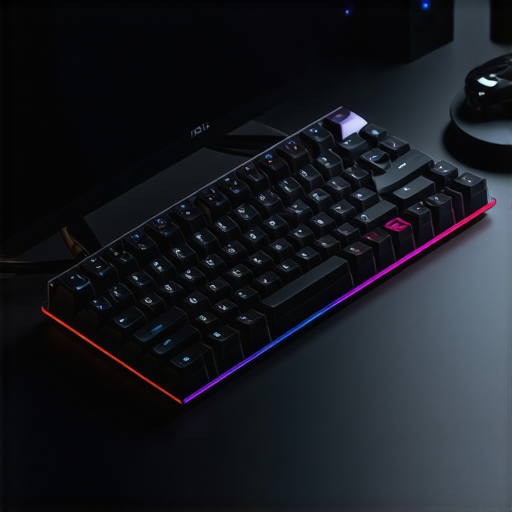

Refining Typing Experience: The Intersection of Low Profile Design and Silent Switch Technology
In the rapidly evolving realm of mechanical keyboards, optimizing both ergonomics and acoustics remains paramount for professionals, gamers, and enthusiasts alike. The advent of low profile keyboards has revolutionized portability and desk aesthetics, while innovations in silent switches have addressed longstanding noise concerns. Integrating these features thoughtfully enhances user experience by reducing strain and minimizing disruptive sound, fostering an environment conducive to focus and productivity.
How Do Low Profile Mechanical Keyboards Transform User Comfort and Workflow Efficiency?
Low profile mechanical keyboards are designed with shorter key travel and reduced actuation height, which translates into less finger strain during extended typing sessions. This ergonomic advantage becomes even more significant when paired with ergonomic considerations that prioritize wrist posture and minimize repetitive stress injury. For professionals engaged in high-volume data entry or software development, these keyboards minimize fatigue, thereby enhancing overall workflow efficiency and precision.
Dominating Niche Markets with Silent Switch Innovations
The quest for silent, tactile responses led to the development of premium silent switches that do not compromise on feedback. These switches leverage dampening materials and unique stem designs to absorb keystroke noise, significantly reducing auditory disturbances. For open-plan offices and co-working spaces, deploying such keyboards fosters a quieter work ambiance, crucial for concentration and collaborative tasks.
Why Are Hot Swappable Low Profile Devices Gaining Traction Despite Durability Concerns?
Hot swappable switches embody a paradigm shift by allowing users to customize or replace switches without soldering. This flexibility appeals to enthusiasts seeking tailored typing experiences or to professionals aiming for rapid hardware troubleshooting. While debates persist about the long-term durability of low profile hot swappable keyboards, recent models employ high-grade materials and locking mechanisms that enhance reliability for daily use.
Are Silent Switches Sacrificing Tactile Feedback in 2026?
This question regularly emerges on expert forums, reflecting the nuanced challenge of balancing silence and tactile sensation. Recent innovations in silent tactile switches demonstrate that it’s possible to achieve a satisfying bump without audible click, an advance supported by rigorous laboratory testing. The key lies in engineered stem designs and damping materials that allow for tactile engagement while suppressing noise.
To delve further into ergonomic customization and the latest silent switch technologies, explore our comprehensive guides or connect directly through our contact page. Your insight could contribute to ongoing innovations shaping the future of keyboard design.
Beyond the Basics: Fine-Tuning Your Silent Keyboard for Peak Performance
While choosing a keyboard with silent switches lays the groundwork for quiet operation, advanced customization can elevate your typing experience further. Adjusting actuation points, modifying key dampening, or even integrating third-party components allows users to tailor their keyboards precisely to their needs, balancing noise reduction with tactile and response preferences. This level of personalization is especially valuable in specialized environments like broadcast studios or intensive collaborative settings where ambient noise must be managed without sacrificing efficiency.
Are Customizable Silent Switches the Future of Professional Workspaces?
Innovations such as hot-swappable keyboards enable users to experiment with different silent switch variants easily. By swapping out switches to best suit specific tasks or personal comfort levels, professionals can create versatile setups without purchasing multiple units. Furthermore, emerging technologies in silent switch design are addressing historical limitations, like mushy feedback or inconsistent actuation, leading to more reliable and satisfying typing experiences for high-demand users.
Leveraging Software to Optimize Silent Keyboard Feedback
Advanced keyboard firmware and software controls allow for dynamic adjustment of key response behavior. Features such as programmable actuation points, customizable debounce times, and key remapping can optimize silenced switches to align with individual typing rhythms. Empirical research suggests that such software-driven calibration can enhance both comfort and accuracy, reducing fatigue and errors during long work sessions. For those interested in exploring these capabilities, many top silent switch models now integrate user-friendly software tools to customize responses seamlessly.
How Will Emerging Materials and Engineering Techniques Reshape Future Silent Switches?
The ongoing development of novel damping materials, stem geometries, and contact mechanisms promises to revolutionize silent switch performance. Experts are now experimenting with composites that absorb vibrations more effectively, while innovative stem designs aim to preserve tactile feedback without noise. These advancements could lead to next-generation silent switches that outperform current models in durability, responsiveness, and sound profile. Staying ahead requires vigilance for emerging patents, industry collaborations, or academic breakthroughs that might define the future landscape of quiet mechanical keyboards. For comprehensive insights into this evolving field, consider reviewing the latest research published by industry leaders and academic institutions specializing in human-computer interaction.
If you’re eager to implement these advanced features into your setup, sharing your experiences or exploring curated tutorials can accelerate your customization journey. Engage with our community or contact us through our contact page to tap into expert advice and the newest innovations in silent keyboard technology.
Beyond Conventional Materials: Unlocking New Levels of Silence and Responsiveness
The pursuit of near-silent mechanical switches fuels ongoing research into advanced damping materials. Researchers are experimenting with composites such as viscoelastic polymers embedded within stem structures to absorb vibrations more efficiently, thereby reducing keystroke noise without sacrificing tactile feedback. These innovative materials not only promise to enhance acoustic profiles but also improve durability by mitigating mechanical wear and mitigating resonance effects that can cause unwanted sound signatures.
Microengineering Techniques that Revolutionize Switch Mechanics
Precision manufacturing through microengineering has opened avenues for designing contact mechanisms that minimize electrical bounce and mechanical chatter. Techniques like laser micromachining enable the creation of ultra-fine contact surfaces, allowing for more consistent actuation and smoother keystrokes. Such meticulous engineering reduces the need for complex damping components, simplifying switch architecture while maintaining or even improving noise suppression.
Could Adaptive Acoustic-Responsive Switches Transform Typing Environments?
Emerging concepts in adaptive acoustic-responsive technology suggest a future where switches could dynamically adjust damping characteristics in real-time based on ambient noise levels or user preferences. By integrating microsensors and actuators within the switch housing, these systems could fine-tune vibration absorption, offering personalized silence or tactile response. While still in early developmental stages, prototypes demonstrate potential for creating ultra-versatile keyboards suited to diverse environments—from quiet offices to lively gaming arenas.
How Do Material Innovations Impact Long-term Performance and Sustainability?
The selection of cutting-edge damping materials extends beyond acoustic performance; it critically influences the environmental sustainability of switch manufacturing. Biodegradable or recyclable composites, such as bio-based polymers, are gaining attention as alternatives to traditional plastics, aiming to reduce ecological footprints. Moreover, materials with inherent resistance to thermal deformation and chemical degradation extend the lifespan of silent switches, reducing e-waste and operational costs. Industry leaders, including E-textiles and composite engineers, are actively publishing research on sustainable materials that meet the rigorous demands of high-performance keyboards, as documented in the American Chemical Society’s recent symposium on eco-friendly electronic components.
For professionals committed to pushing the boundaries of silent keyboard technology, understanding and leveraging these material and engineering advancements are essential. Engaging with ongoing research, participating in industry collaborations, and experimenting with emerging prototypes can position you at the forefront of this revolution. To deepen your expertise and access the latest developments, consider connecting with academic institutions or specialized research consortia dedicated to human-computer interaction improvements—your innovations could shape the next generation of ultra-quiet, responsive, and sustainable keyboards.
Harnessing Nano-Engineered Materials for Ultra-Quiet Action
Recent breakthroughs in nanotechnology have introduced novel damping composites that significantly suppress keystroke noise, elevating silent switch performance to unprecedented levels. These materials, composed of engineered nanostructures, absorb vibrations more efficiently and maintain tactile integrity, promising durable and whisper-quiet typing experiences for high-stakes environments.
How Can Microfabrication Techniques Personalize Keyboard Feedback?
Microengineering advances enable precise manipulation of switch components at a microscopic scale, allowing for customized actuation profiles and response characteristics. By employing laser micromachining and lithography, manufacturers can fine-tune damping and contact points, offering bespoke tactile sensations that adapt to individual user preferences or task-specific demands.
What Are the Challenges of Integrating Adaptive Acoustic Modulation in Compact Designs?
Embedding real-time acoustic adjustment systems within low profile, hot-swappable keyboards presents spatial and power constraints. Overcoming these hurdles involves innovative miniaturization of sensors and actuators, as well as harnessing low-power control algorithms. Success in this realm could lead to keyboards that dynamically balance silence and tactile feedback based on ambient noise or user mood, transforming workspace ergonomics.

Image prompt: Microfabricated switch components with nanostructured damping layers, showcasing precision design for silent performance.
Balancing Sustainability and Performance in Material Selection
Sustainable innovations in switch materials focus on biodegradable polymers and recyclable composites that do not compromise acoustic dampening or responsiveness. Cutting-edge research indicates these eco-friendly options can meet the rigorous durability standards of high-performance keyboards, aligning environmental responsibility with professional-grade quality.
Can Smart Materials Enable Self-Adjusting Silence in Future Keyboard Designs?
Smart materials capable of changing their physical properties in response to electrical stimuli could allow switches to autonomously modulate damping and tactile feedback. Such adaptive systems would tailor typing responses in real-time, optimizing for noise, response, or energy efficiency, and represent a significant leap toward intuitive, user-centered design in mechanical keyboards.
Why Progressing Beyond Traditional Materials Transforms Typing Dynamics
Integrating novel damping composites with enhanced vibration absorption extends device longevity and maintains consistent acoustic profiles under rigorous use. As researchers explore bio-inspired and hybrid materials, the potential for creating ultra-quiet switches with high tactile fidelity becomes increasingly feasible, promising a future where silence and responsiveness coexist seamlessly.
Stay at the forefront by engaging with pioneering research and experimental prototypes that push the boundaries of silent switch technology. Connecting with academic or industry innovators through specialized forums and conferences can catalyze your mastery in this transformative field.
Expert Insights & Advanced Considerations
The Promise of Material Innovation
Advancements in damping materials and stem engineering are paving the way for silent switches that maintain tactile fidelity, ensuring durability and a satisfying typing experience. These innovations could reduce mechanical wear while enhancing acoustic profiles, transforming user expectations.
Customization at the Micro Level
Microengineering techniques, such as laser micromachining, are enabling unprecedented precision in switch components. This allows for tailored actuation points and damping characteristics, offering personalized ergonomics and responsiveness for diverse user needs.
Adaptive Technologies Changing the Game
Emerging adaptive acoustic-responsive switches are experimenting with real-time modulation, adjusting damping based on ambient noise levels. Such smart systems could revolutionize how professionals interact with keyboards, blending silence with tactile feedback seamlessly.
Sustainable Materials for a Greener Future
Researchers are exploring biodegradable and recyclable composites that do not compromise performance. Incorporating eco-friendly damping layers and stems extends the lifespan of silent switches while aligning with sustainability goals.
Integrating Nano-Engineered Components
Nanotechnology-driven damping composites offer superior vibration absorption, dramatically reducing keystroke noise. These materials promise durable, whisper-quiet experiences crucial for open-office environments and recorded media production.
Curated Expert Resources
- Ultimate Guide to Silent Switch Mechanical Keyboards for 2025—A comprehensive resource covering the latest innovations in silent switch technologies, emphasizing durability and user customization.
- Low Profile Mechanical Keyboards That Combine Style and Functionality—A detailed review of the best low profile models balancing aesthetics with ergonomic features, essential for modern workspace design.
- Top Hot Swappable Mechanical Keyboards for Customization in 2024—An authoritative analysis of modular keyboards enabling effortless switch changes, promoting versatility and future-proofing.
Final Perspective on Silent Keyboard Evolution
In the realm of low profile mechanical keyboards, the trajectory towards quieter, more responsive, and sustainable solutions is clear and compelling. Integrating cutting-edge materials, microengineering precision, and adaptive systems signifies a new horizon where comfort, efficiency, and environmental responsibility coalesce. As industry leaders and enthusiasts explore these frontiers, engaging with dedicated research and community insights becomes paramount. We invite you to share your experiences, contribute innovative ideas, or delve deeper through our curated resources—becoming part of shaping the future landscape of silent, ergonomic keyboards.